
Counseling Degrees Available at Touro University
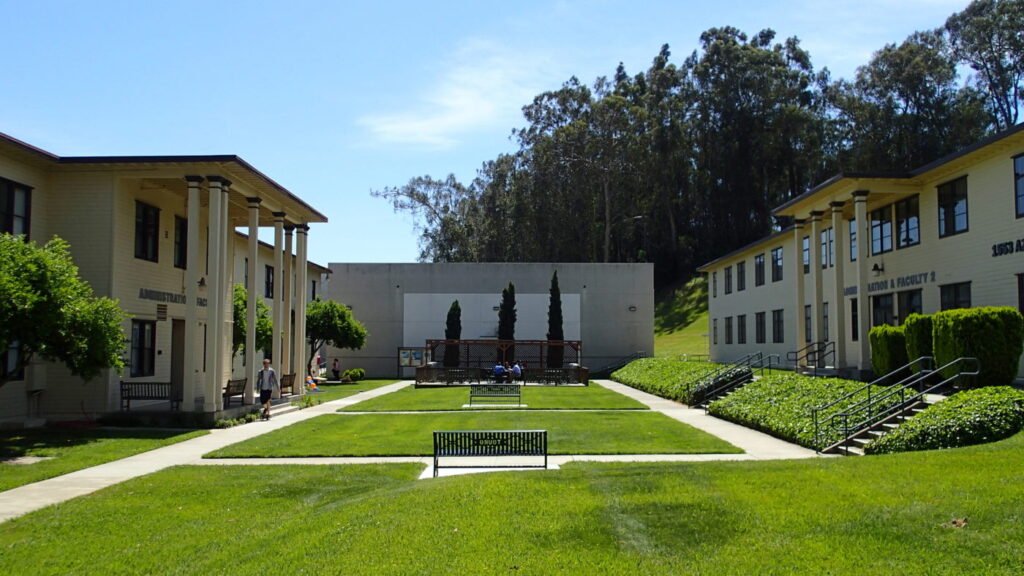
Touro University is an educational institution committed to addressing critical needs in healthcare and education while serving as a community resource. The university operates across multiple locations and offers counseling programs designed to prepare mental health professionals for diverse practice settings. Your experience in the counseling field at Touro begins with programs structured around practical application and clinical excellence.
The mental health counseling program at Touro University represents a 60-credit curriculum devoted to counselor education. Students complete this program within two to three years and gain exposure to various counseling theories needed for clinical practice. The MS in Clinical Mental Health Counseling (CMHC) is one of the few CACREP-accredited programs in the NY Metro area. This accreditation confirms that the program’s content and quality meet standards set by the counseling profession.
School counseling represents another pathway available through Touro’s Graduate School of Education. This 60-credit program gives you the understanding of problems that affect schools, children and families in complex educational environments. Most students take three years to complete the curriculum, which has a 600-hour internship during the final year. After completion, you may apply for initial New York State certification as a School Counselor. Additional requirements such as passing the New York State School Counseling Examination apply.
Touro University Worldwide extends counseling education through an online Master of Arts in Counseling with Addiction Counseling Specialization. This program prepares graduates to meet licensure requirements for substance abuse counselors in California and other states. The curriculum explores assessment and treatment of substance abuse and provides knowledge and hands-on practice in treating individuals with addiction and dependency disorders.
Clinical fieldwork forms the foundation of Touro’s counseling programs. The CMHC program requires 700 hours of clinical fieldwork experience, divided into 100 hours of practicum placement and 600 hours of internship. A dedicated Fieldwork Coordinator supports these placements and connects students with outpatient clinics, hospital settings, substance abuse treatment facilities and forensic settings. The student-centered environment at Touro focuses on providing guidance and support throughout your years in the program while taking your future career goals into consideration.
What counseling programs does Touro offer?
Your choice of counseling programs at Touro University has multiple specializations at different campuses. Each program prepares you for distinct career pathways in mental health. The institution offers both campus-based and online options. You can select the format that lines up with your professional goals and geographical location.
The Clinical Mental Health Counseling program operates from both Manhattan and Brooklyn campuses. It delivers a 60-credit curriculum that can be completed in two years full-time through an accelerated track or three years part-time. This CACREP-accredited program registers with the New York State Education Department and meets educational standards required for licensure in New York State. The coursework has the 350-hour educational requirements needed to apply for the CASAC-Trainee certificate. This positions you to work in hospitals, accredited schools, mental health centers and government agencies.
School counseling pathways vary by campus location. The Graduate School of Education provides a 60-credit MS program delivered online. Touro offers a Master of Education School Counseling program spanning two years in Nevada. The program enrolls 46 students annually through one cohort. This program operates online except for the internship component. It’s designed if you’re a current teacher or non-certified individual seeking to affect student lives through counseling.
Touro University Worldwide extends specialized training through its Marriage and Family Therapy program. It offers multiple tracks to match your career direction. The COAMFTE-approved clinical track requires 18 courses for 54 credits plus 6 practicum courses for 18 additional credits. This brings the total to 72 credit hours with 300 practicum client contact hours. The Licensed Professional Clinical Counseling (LPCC) Track adds four additional courses to the clinical track for 82 credit hours total. A non-clinical track provides 18 courses spanning 54 credits without practicum requirements.
The online Master of Arts in Counseling with Addiction Counseling Specialization provides two distinct tracks. The MAC Track requires 14 courses for 42 credits, 2 practicum courses for 6 credits and 4 clinical internship courses for 12 credits. This totals 60 credit hours. Students planning California licensure must select the MAC Advanced Topics Track. This track adds four advanced courses for 12 additional credits and brings the total to 72 credit hours. The Board of Behavioral Sciences approves this track for California requirements.
Internships/Practicum at Touro University
To advance to fieldwork at Touro University, you must meet specific academic measures that demonstrate your readiness for clinical practice. Students must complete all prerequisite coursework and relevant detailed exams before they enter practicum and internship experiences. Eight courses require a minimum grade of B. You’re permitted to receive less than a B in only one course that doesn’t require this minimum grade. Students who receive more than one grade below B will have one chance to retake the class, though a cumulative GPA of 3.0 remains necessary for good academic standing.
Note that you cannot begin your internship until you’ve completed 100 practicum hours and the concurrent course. You’ll also need to pass Comprehensive Exam #2 before you receive clearance to begin internship. This structured progression will give you foundational skills before you advance to more intensive clinical work.
You’ll receive weekly 1-hour supervision from a mental health professional within your community-based placement. These off-site experiences receive further support through weekly 1.5-hour supervision from program faculty and coursework. This dual supervision model provides practical guidance at your site and academic integration through university faculty.
All practicum and internship sites must receive approval before your formal experience starts. The program’s Fieldwork Coordinator will assist you in finding a placement, but you remain responsible for securing a position in the end. The university will assist students in finding placements but is not responsible for securing a placement for any individual student. Students are not permitted to accrue internship or practicum hours unless they are enrolled in the appropriate supervised course at Touro University at the same time and have secured documented site approval from program administration.
School counseling students follow a structure like this for the internship sequence. You become eligible for the 600-hour internships after you complete the 100-hour practicum. These are divided into 300 hours for each internship course. Students are encouraged to begin applying for internships approximately one year before the experience starts. Interns must maintain logs that document days, hours and responsibilities at the internship site. Supervisors sign these logs, and students submit them monthly.
What sets Touro University apart?
Faculty expertise and institutional accreditations position counseling programs at Touro University New York apart from comparable offerings. The Clinical Mental Health Counseling program holds accreditation from both the Council for Accreditation of Counseling and Related Educational Programs (CACREP) and the New York State Office of the Professions. This ensures compliance with educational standards needed to obtain licensure in New York State. This dual accreditation framework creates pathways for graduates to apply for Nationally Certified Counselor (NCC) status upon graduation and passing either the National Clinical Mental Health Counselor Examination (NCMHCE) or the National Counselor Examination (NCE).
Scholar-practitioner faculty bring active clinical experience directly into classrooms. Dr. Faye Walkenfeld, Chair of the Department of Behavioral Science, maintains a distinguished private practice as a licensed psychologist in New York State. Dr. Lindsey Grossman serves as Program Director for Clinical Mental Health Counseling, while Dr. Kimberly Johnson directs special projects within the program. The School Counseling program operates under Dr. Yair Maman’s leadership as Program Chair.
Class scheduling accommodates working professionals through evening course alignment. You can maintain employment while completing your degree. The small faculty structure creates personalized attention, with faculty members described as very sensitive to student needs. More, students benefit from an affiliation with the Albert Ellis Institute and get training opportunities in rational emotive behavior therapy approaches.
Graduates receive a certificate that qualifies them to apply for the Credentialed Alcoholism and Substance Abuse Counselor-Trainee (CASAC-T) designation upon program completion. This additional credential expands employment opportunities in hospitals, clinics, community agencies and private practice settings when combined with your degree.
Next steps
Touro University provides complete counseling education through CACREP-accredited programs that combine rigorous preparation with extensive clinical fieldwork. Your path to professional licensure benefits from scholar-practitioner faculty and flexible evening scheduling. The university offers specialized certifications like CASAC-T credentials. Structured internship support and multiple program tracks in campus-based and online formats position you to enter mental health careers of all types. You gain both theoretical knowledge and practical clinical experience needed for professional success.