
Counseling Programs at Syracuse University
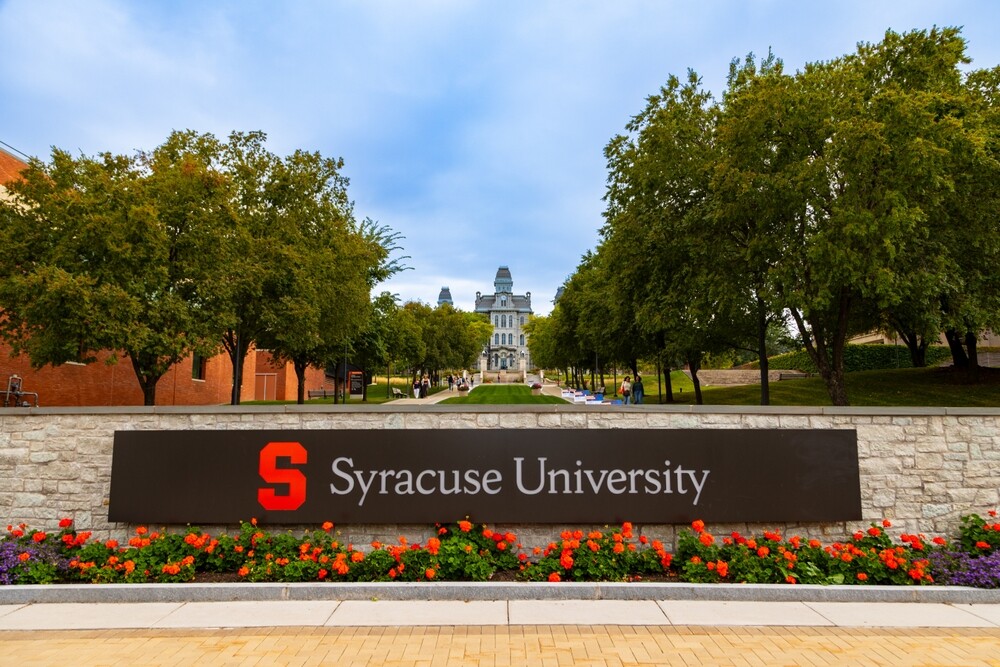
Counseling Programs at Syracuse University boast a 90+% placement rate within 6 months of graduation and a 100% pass rate on the National Counselor Examination for Licensure and Credentialing in the last five years. These outcomes reflect the quality and rigor of the clinical counseling master’s programs that counseling Syracuse University offers.
Syracuse provides detailed training with over 700 hours of supervised clinical experiences, whether you’re interested in clinical mental health counseling or marriage and family therapy. The Marriage and Family Therapy Program has been accredited for more than 50 years and is one of the longest-standing programs of its kind.
This guide explores the counseling programs available, internship opportunities, and what makes Syracuse University a strong choice for your graduate education.
What counseling programs does Syracuse offer?
Syracuse University offers three CACREP-accredited counseling programs through its Department of Counseling and Human Services: a Master of Science in Clinical Mental Health Counseling, a Master of Science in School Counseling P-12, and a Doctor of Philosophy in Counseling and Counselor Education. The department maintains a steadfast dedication to program quality through accreditation by the Council for Accreditation of Counseling and Related Educational Programs.
The Clinical Mental Health Counseling master’s program requires 60 credits and prepares you to offer a broad range of clinical mental health counseling services that emphasize wellness and advocacy. Most students complete the program full-time in 2 years, including summer sessions. Part-time study arrangements can be made with careful advisor planning. You must complete the program within 7 years. Classes meet in the afternoons and evenings, scheduled from 4-7 pm or 7-10 pm. This allows you to balance coursework with practicum, internship, and employment commitments.
Your coursework will cover foundations of mental health counseling, family systems and therapy, substance abuse counseling, life-span human development, and psychodiagnosis. You’ll also study treatment, psychopharmacology, and group work in counseling. You’ll complete at least 700 hours of supervised clinical experiences in community settings. This includes 100 hours in a practicum and 600 hours in internships. This program meets all educational requirements for the New York State license in clinical mental health counseling (LMHC). Graduates can apply for a limited permit to practice mental health counseling while accumulating the required post-degree hours to take the licensure exam.
The School Counseling P-12 master’s program spans 60 credits and prepares you to work with youth of all ages in urban, rural, and suburban preK-12 school settings. The program follows the national model and standards of the American School Counselor Association and the National Board of Certified Counselors. It meets academic requirements for original and professional New York State Certification as a School Counselor. You’ll develop the dispositions, knowledge, and skills to promote academic, career, and personal/social development of all students through analytical school counseling programs.
The Counselor Education PhD program builds on entry-level competencies of a master’s degree in counseling and prepares you for academic positions and careers in counselor education. This residential doctoral program trains practitioner-scholars through developmentally sequenced curricular, mentoring, and supervisory experiences. The program achieved a 100% employment rate for graduates within 6 months. Graduates work as faculty members, university counseling center clinicians and supervisors, and directors of counseling programs. Others find positions in hospitals, community agencies, and K-12 schools.
All programs include extensive fieldwork opportunities where you learn through hands-on experience working with students and clients in a variety of counseling and educational settings.
Internships/Practicum at Syracuse University
Field experiences at Syracuse University follow a well-laid-out progression that begins with practicum and advances to internship placements. You’ll start with COU 750, a one-semester practicum requiring 100 hours of clinical placement to advance your counseling skills. This course serves as your entry point into direct client work after you complete prerequisite courses COU 624 and 644.
You’ll work in school, agency, college, or rehabilitation settings during practicum and assume the varied roles of a counselor. Video or audio taping at your practicum site is required for supervision purposes. You receive weekly individual and group supervision on campus and get feedback as you develop your clinical competencies. The practicum can be repeated twice for a maximum of 6 credits.
After you complete practicum, you advance to COU 790, the internship phase requiring 600 hours of supervised field placement. Internships maintain the same weekly individual and group supervision structure and meet all accreditation guidelines. This phase can be repeated twice for a maximum of 6 credits.
Field experiences span elementary, middle, and high school levels for school counseling students. This cross-level exposure prepares you to work with diverse age groups and developmental stages within educational settings.
Clinical mental health counseling students benefit from field partnerships across Central New York that Syracuse has built over many years. Syracuse maintains strong relationships with multiple placement sites, including Helio Health, Liberty Resources, VA Medical Center, Family Counseling Services, Barnes Center at the Arch (SU Counseling Center), Restore & Renew Therapy Services, Crouse Addiction Treatment Services, SUNY ESF Counseling Center, Cayuga Counseling Center, SUNY Oswego Counseling Center, Colgate College Counseling Center, Hamilton College Counseling Center, and FamilyCare Medical Group behavioral services.
Field experiences occur during business hours on weekdays. Some sites are available along bus routes, but you should have access to independent transportation to travel to and from field placement sites. This scheduling structure allows you to participate with clients during standard service hours.
Part-time students can complete the clinical mental health counseling program with careful planning. You’ll need to consult with your advisor about course sequencing when balancing field experiences with other commitments. This flexibility accommodates working professionals who seek to transition into counseling careers without leaving their current employment.
The combination of on-campus supervision and field-based practice creates a balanced learning environment. Theoretical knowledge translates into clinical skills under guided oversight.
What sets Syracuse University apart?
Faculty expertise distinguishes Counseling Programs at Syracuse University from other institutions. You’ll learn from nationally and internationally recognized professors who serve as leaders in scholarship and professional counseling organizations. These faculty members bring active engagement in social justice, servant leadership and advocacy work directly into your classroom experience. They manage to keep professional networks that open doors for students seeking to establish themselves in the counseling field.
The Counseling Training Clinic features innovative technology to record, analyze and document clinical work. This reliable infrastructure supports your skill development through detailed feedback on your counseling sessions. You can review your practice sessions with supervisors and identify strengths and areas for growth through precise technological tools unavailable at many programs.
Syracuse offers study abroad opportunities through short-term trips and semester-long programs worldwide. School of Education students qualify for exclusive funding to support these international experiences and make global learning available without prohibitive costs. This international exposure broadens your cultural competency and prepares you to serve diverse populations.
The program philosophy centers on seven core signatures that shape your education: Reflexive Leadership, Meaningful and Engaged Scholarship, Experiential and Constructivist Pedagogy, Socially Just Advocacy and Activism, Constructivist Clinical Supervision, Humanistic Engagement, and Wellness, Prevention, and Resiliency. These commitments translate into constructivist and experiential learning environments where you construct knowledge actively rather than receive information passively.
CACREP accreditation has been managed to keep since 1994. This demonstrates sustained commitment to quality standards across three decades. This long-standing accreditation history signals program stability and consistent adherence to professional standards.
Research collaboration sets clinical counseling master’s programs at counseling Syracuse University apart from purely practice-focused alternatives. You gain opportunities for research, writing, leadership and presenting alongside faculty members and doctoral students. These experiences develop scholarly skills that improve your clinical practice and prepare you for potential academic careers.
PhD students receive particular support through the Future Professoriate program, which develops teaching skills essential for academic positions. Graduate assistantships provide solid financial support with excellent medical benefits. Flexible policies allow you to use GA support for summer courses. Financial backing extends to attending and presenting at national conferences and builds your professional visibility while still in training.
The student body reflects global diversity, with members arriving from the United States and around the world. This diversity enriches classroom discussions and clinical training through varied perspectives and life experiences.
Next steps
Syracuse University provides complete counseling education through CACREP-accredited programs that deliver exceptional outcomes. You’ll benefit from expert faculty and clinical training that exceeds 700 hours. Advanced learning facilities support your development. Strong placement rates and research opportunities position you for success in your counseling career. Syracuse offers the training and support—the work to be done to excel in this rewarding profession. You can pursue clinical mental health counseling, school counseling, or doctoral studies.