
Counseling Programs offered at SUNY Fredonia
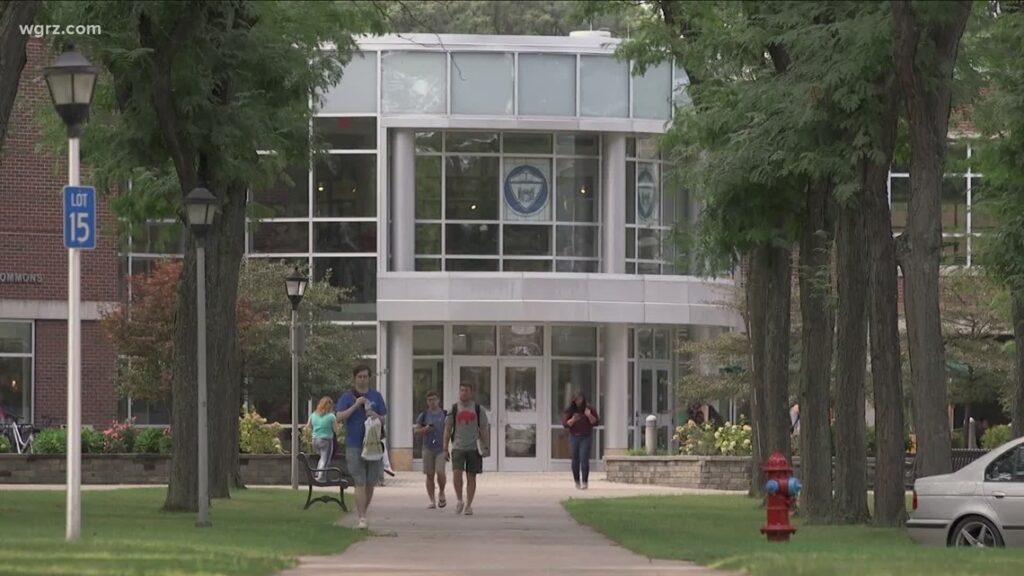
Counseling degrees at State University of New York at Fredonia offer a direct path to address the growing need for qualified mental health professionals. SUNY Fredonia launched its Master of Science in Clinical Mental Health Counseling (CMHC) degree in response to this critical need. This nationally aligned program has 63 credits and prepares you to become a licensed mental health counselor. The curriculum covers everything in professional ethics, social and cultural diversity, human development, and assessment. Graduates can work in diverse roles that include private practice, public service, higher education, and court systems. You can even access funding through the Career Pathways Training program to support your educational expenses. This guide explores what makes SUNY Fredonia’s mental health counseling programs a strong choice for your career advancement.
What counseling programs does SUNY at Fredonia offer?
SUNY Fredonia offers one specialized graduate program in counseling: the Master of Science in Clinical Mental Health Counseling. This program stands out with its low-residency hybrid format. You can pursue advanced credentials while maintaining your current employment. The structure combines monthly in-person weekend sessions on campus with asynchronous online coursework and field experiences near your home.
The program follows a curriculum that lines up with state and federal standards for mental health counselor licensure. You’ll complete coursework across nine core areas: professional orientation and ethical practice, social and cultural diversity, human growth and development, career development, helping relationships, group work, assessment, research and program evaluation, and trauma-informed care. This detailed approach prepares you to sit for the New York State licensure exam upon graduation.
Your learning experience unfolds through seven-week course modules offered year-round. J-Term and summer sessions are included. The accelerated format enables degree completion in under three years. Monthly face-to-face instruction occurs on Fredonia’s campus from Friday at 6 PM through Sunday at 4 PM. You’ll work with course materials online and complete field placements in clinical settings convenient to your location between these sessions.
The curriculum covers 21 distinct courses totaling 63 credits. Core coursework has Introduction to the Counseling Profession, Psychopathology: Diagnosis and Treatment in Counseling, Trauma Informed Care and Crisis Intervention, Counseling Techniques, and Legal and Ethical Issues in Counseling. You’ll also study specialized topics such as Treatment of Substance Abuse in Counseling, Counseling Children and Adolescents, Psychological Measurement, Social and Cultural Issues in Counseling, and Career Development.
Advanced courses cover Group Counseling Procedures, Couples and Family Counseling, Human Growth and Development, Counseling Theories and Intervention, and Helping Relationships. You’ll complete two practicum experiences and two internships as part of your clinical training requirements. The program concludes with coursework in Research Methods and Supervision in Clinical Mental Health.
Faculty members bring both academic expertise and active clinical practice to their teaching. These award-winning instructors serve as mentors throughout your graduate studies and offer guidance grounded in real-life mental health settings.
You need a bachelor’s degree from an accredited institution with a minimum 3.0 cumulative GPA for admission, though conditional admission may be offered for lower GPAs. You’ll submit official transcripts, a resume, and two recommendation letters. Your statement of intent should address three areas: your capacity for forming effective and culturally relevant interpersonal relationships, your aptitude for meeting program demands, and how the program lines up with your career objectives. Program faculty may schedule individual interviews with applicants.
The program launched in spring 2024. Enrollment has grown from 11 students to 50 since then. Graduates qualify for positions across multiple sectors that include private practice, public agencies, higher education institutions, and court systems.
Internships/Practicum at Fredonia
Clinical training is the substance of your educational trip in SUNY Fredonia’s mental health counseling program. Your placement schedule unfolds across three distinct phases. Each builds upon the previous experience. The Practicum spans one full semester and needs 6-8 hours per week at your internship site. Internship I and Internship II each need 18-20 hours weekly over a full semester after this foundation. Group supervision comes embedded in each course and provides ongoing feedback and support throughout your clinical development.
You bear responsibility to secure your own placements. You work with the Director of Clinical Training who provides guidance through this process. Clinical placement manuals give both you and your site supervisors the frameworks and expectations needed. Your field work occurs in clinical settings near your home. This proximity eliminates lengthy commutes and allows you to build professional networks within your local community.
Acceptable placement settings must meet specific legal standards. Your site must be a location where authorized individuals provide mental health counseling services as defined in Education Law section 8402(1). Qualifying settings include professional corporations, registered limited liability partnerships, professional service limited liability companies, and sole proprietorships owned by licensed professionals providing mental health counseling services. Programs operated, regulated, funded, or approved by various state agencies qualify. These include the Department of Mental Hygiene, Office of Children and Family Services, Department of Corrections and Community Supervision, and Department of Health. Federal facilities and entities holding state-issued waivers also meet placement requirements.
Recording counseling sessions serves as a vital component of your training model. You submit recorded sessions to campus supervisors for review and critique. Keep in mind that when HIPAA violations prevent audio or video recording, your site supervisor observes counseling sessions for supervision and evaluation purposes directly.
The coursework structure has CMHC 660 Counseling Practicum and CMHC 670 Counseling Internship, each worth 3 credits. You complete both courses twice to satisfy program requirements. Your practicum functions as a group supervision experience where you present and discuss cases from your clinical field placement. You receive feedback from faculty supervisors and peers. Time spent scrutinizing systems issues that affect treatment processes enriches your understanding of ground counseling contexts.
The Clinical Training Coordinator confirms all required documentation has been filed properly upon completion of your clinical placement experiences. These records include practicum and internship contracts, time sheets, evaluations, surveys, and professional training certificates. The program archives all student files post-completion and uses these documents to complete state licensure forms upon your request. Faculty members provide letters of recommendation for employment or graduate study at your request.
What sets SUNY at Fredonia apart?
Several features position SUNY Fredonia’s counseling programs and services above comparable institutions. The clinical staff holds licenses from the State of New York Office of Professions. This ensures they provide mental health services within their trained scope of expertise. These counselors employ trauma-informed, brief-strategic treatment models grounded in research-based practices that promote improvements during early therapy stages.
The Counseling Center operates from a single-session mindset. Each session is organized as potentially the last to optimize effectiveness. Clients leave sessions with emotional relief and increased hope. They achieve positive outcomes as they define them. This approach allows counselors and clients to work together. They identify concerns and treatment goals suited to unique needs.
Student satisfaction data reflects this quality. 98% of students felt understood and respected. 96% indicated sessions were right for them and the counselor’s approach fit well. More, 95% confirmed they worked on what they wanted to address.
The center demonstrates strong commitment to professional development. Counseling staff completed over 200 hours of continuing education on topics including Short-term Solution Focused Therapy, Wilderness Therapy Interventions, and Trauma Informed Schema Therapy. Faculty members bring award-winning academic credentials and active clinical practice to their instruction.
Fredonia maintains a staff-to-student ratio of 1:1,000 to 1:1,500. This is consistent with comparable universities. During the 2021-2022 academic year, 12% of the student population participated in clinical services. The center provided 3,019 clinical sessions serving 615 unique students. 28% of intakes were conducted within 24 hours.
Partnerships extend service accessibility. The BetterMynd platform offers free teletherapy sessions with licensed counselors beyond standard hours. The SUNY Tele-Psychiatry Network provides psychiatric evaluation and medication monitoring at no charge. Prevention, Advocacy, and Wellness Services (PAWS) addresses alcohol and drugs, sexual assault and relationship violence, and sexual health through advocacy and educational programming.
Next steps
SUNY Fredonia’s clinical mental health counseling program delivers a detailed pathway to professional licensure through its flexible hybrid format. The 63-credit curriculum combines rigorous academic coursework with extensive field experience and prepares you for diverse career opportunities. Your education benefits from licensed faculty who bring active clinical expertise and award-winning teaching. You gain both theoretical knowledge and practical skills for success in today’s mental health profession. Career Pathways funding further supports your educational investment.