
Counseling Degrees Available at Pace University
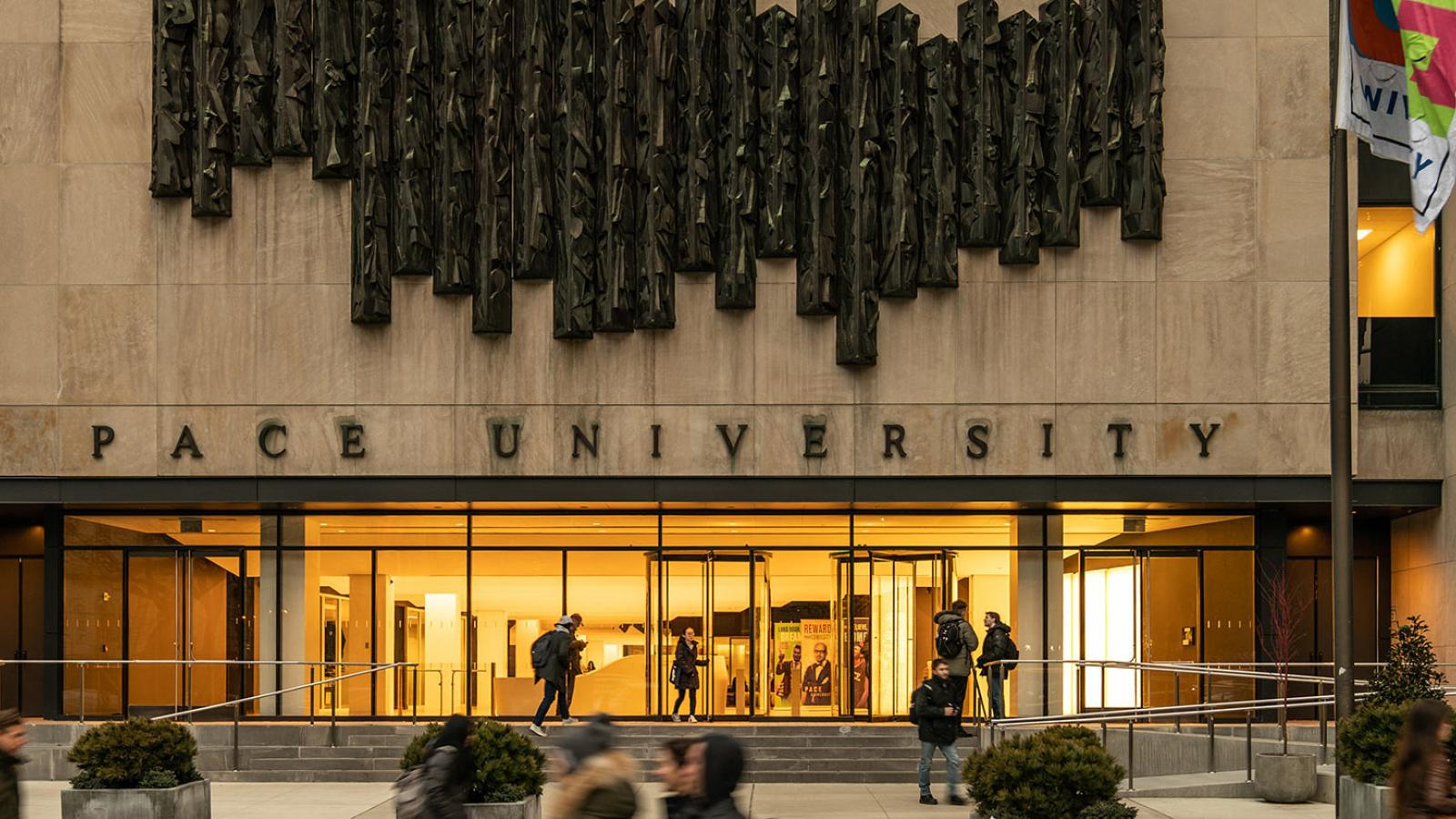
Pace University offers advanced academic programs in mental health counseling through the Dyson College of Arts and Sciences, beyond these counseling services. The MS in Mental Health Counseling program gives you the knowledge and skills needed to become a licensed counselor. It combines theoretical coursework with hands-on ground application. This master’s program has 700 hours of supervised internships and practicum experiences. You get real-life training in some of the world’s leading clinical settings.
Your training takes place in prestigious healthcare facilities throughout the New York metropolitan area. You’ll gain hands-on experience at NewYork-Presbyterian Hospital, St. Vincent’s Hospital and Montefiore Medical Center, among other leading hospitals and community organizations. These partnerships position you to build professional connections while developing clinical competencies in diverse settings.
The Council for Accreditation of Counseling and Related Educational Programs (CACREP) accredits both the MS and PhD programs. You receive education that meets national standards. The curriculum emphasizes cultural competence, ethical practice and evidence-based approaches. This prepares you to work with children, adolescents, families and adults in settings of all types.
The PhD in Mental Health Counseling prepares you to lead in research, advocacy and counselor education for those seeking advanced training. This selective doctorate program gives you advanced clinical skills, supervision techniques and research expertise through specialized coursework and hands-on fieldwork. You’ll have opportunities to develop expertise in areas such as grief counseling and substance abuse while working alongside leaders in the mental health field.
The doctoral program trains you in five key areas: counselor education, supervision, advocacy, research and advanced counseling practice. The program prepares you to make contributions to the mental health counseling profession, whether you imagine teaching, conducting research or influencing policy.
What counseling programs does Pace University offer?
The Dyson College of Arts and Sciences offers several graduate pathways in counseling and psychology, each designed to meet different career objectives. The MS in Mental Health Counseling serves as the foundational program, structured as a 60-credit curriculum that prepares you for New York State certification in mental health counseling. Admission requires a bachelor’s degree in psychology or a related field, though you may need to complete foundational undergraduate courses such as General Psychology, Lifespan Development, or Psychopathology before beginning graduate study.
The curriculum requires 16 core courses among 4 elective courses. Your coursework follows a strict specified order, with certain courses requiring passing grades of ‘B’ or better and department approval. Core courses span several areas and include MHC 658 Group Dynamics, MHC 687 Foundations of Mental Health Counseling and Consultation, and MHC 694 Practicum in Mental Health Counseling. Program completion takes two to three years. Specialized knowledge areas range from loss and grief counseling to substance abuse, post-traumatic stress and resilience, and positive psychology.
The PhD in Mental Health Counseling runs as a full-time, 48-credit program with a maximum study period of 8 years for those who want doctoral-level training. This selective doctorate accepts around 10 students per academic year and creates small classes where you receive exposure to evidence-based counseling approaches for demographically and clinically diverse populations. The first two years consist of core coursework that includes practicum, internship, and a comprehensive examination at the end of the first year.
Pace offers specialized programs in addition to mental health counseling. The Psychiatric Mental Health Nurse Practitioner Certificate through the Lienhard School of Nursing serves master’s-level nurse practitioners who want certification in psychiatric mental health. The MSEd in School Psychology provides knowledge and field experience for delivering psychoeducational services in schools, with bilingual students eligible for the Bilingual Education Extension to the New York State certificate. The PsyD in School-Clinical Child Psychology, accredited by the American Psychological Association, follows a practitioner-scholar training model that integrates academic coursework with immersive field experience.
Internships/Practicum at Pace
Field placement experiences are the foundations of your clinical training in the MS program. The three-semester sequence has one practicum semester (MHC 694) followed by two internship semesters (MHC 675 and MHC 676). Each builds upon the previous experience. You must complete at least 36 credits before enrolling in practicum. You’ll remain at the same field placement site throughout all three semesters.
Practicum requires a minimum of 100 hours over a full academic term. At least 40 hours must be dedicated to direct service with actual clients. You advance to the internship phase after successful completion. There you accumulate 600 hours of supervised counseling work in roles relevant to mental health counseling. A minimum of 240 hours must involve direct service with clients. On-site supervisors provide individual and triadic supervision averaging one hour per week throughout both practicum and internship. They work in consultation with program faculty.
The PhD program requires a different structure. Your doctoral internship totals a minimum of 600 overall clock hours, spread across two semesters at about 20 hours per week. This experience must extend your clinical practice into new areas beyond your regular work responsibilities, even if conducted at your current worksite. You participate in direct counseling plus two additional activities from supervision, teaching, research, or leadership and advocacy. Weekly supervision has one hour of individual or triadic supervision with your site supervisor and 1.5 hours of group supervision with the course instructor.
The Counseling Center at the NYC campus operates an APA-accredited doctoral internship program for those seeking specialized training in health service psychology. This program has held accreditation since 1986. The program accepts 4 interns each year from a national pool of 150 to 170 applicants. Interns receive detailed training through five seminars, group supervisions, and consultation rotations with campus departments.
What sets Pace University apart?
Pace University’s counseling programs stand out as competitive choices for graduate study. The curriculum emphasizes hands-on skills development through role-playing and group exercises. It moves beyond traditional lecture-based instruction to build practical competencies in interview techniques and research methods. This experiential approach lines up with Pace’s national ranking as #1 for experiential learning. You develop clinical skills through active practice rather than passive observation.
New York State’s diagnostic privilege designation offers a major advantage. Graduates who complete the MS in Mental Health Counseling program and get licensure receive authority to diagnose clients. This credential expands your employment opportunities across facilities of all types and increases your eligibility for a broader range of insurance panels. It improves your earning potential. New York State recognizes your diagnostic expertise as equivalent to that of social workers, psychologists and psychiatrists.
Program effectiveness data demonstrates consistent excellence. 86% of stakeholders rated the program as Effective or Very Effective in meeting its objectives for the 2024-2025 academic year, while 99% rated it as Adequate, Effective, or Very Effective. These outcomes match 2023-2024 data closely and confirm year-over-year consistency. Completion rates reached 98%. 100% of students secured field placements. 73% of graduates reported employment in the field based on survey data.
Pace ranks #2 among Best Clinical, Counseling, and Applied Psychology Bachelor’s Degree Schools in New York. The university’s location in the NYC metro area provides access to diverse clinical settings. Faculty and alumni hold core leadership positions in the New York Mental Health Counselors Association. Students receive individual-specific instruction within a supportive academic environment. The program commits to evaluation and curriculum development that meets changing student needs.
Next steps
To apply to counseling programs at Pace University, you must hold a bachelor’s degree from an accredited institution. Your application package consists of several components: a completed application form, a non-refundable $70 application fee, two letters of recommendation from academic or professional references, a resume detailing at least five years’ employment history, a personal statement explaining your graduate study goals, and official transcripts from every college or university you attended. On top of that, international applicants must submit TOEFL, IELTS, or Pearson PTE academic scores.
Graduation from the MS in Mental Health Counseling program makes you eligible for New York State certification in mental health counseling. This qualification prepares you for professional counseling positions and advanced training in specific theoretical approaches. The program also provides foundational credits for careers in higher education advisement or transitions to doctoral study. Students who complete the program with a high level of achievement receive encouragement to apply to the PhD in Mental Health Counseling program at Pace.
You can apply directly to doctoral programs including the PhD in School Psychology, PhD in Clinical Psychology, or PsyD in School-Clinical Psychology without requiring a master’s degree first, whether you pursue the masters in mental health counseling nyc track or explore the difference between psychology and counseling through alternative pathways. Tuition for the MS in Mental Health Counseling stands at $1,495 per credit. Financial assistance options include scholarships, grants, on-campus employment and loans based on availability and need.