
Counseling Programs offered at Niagara University
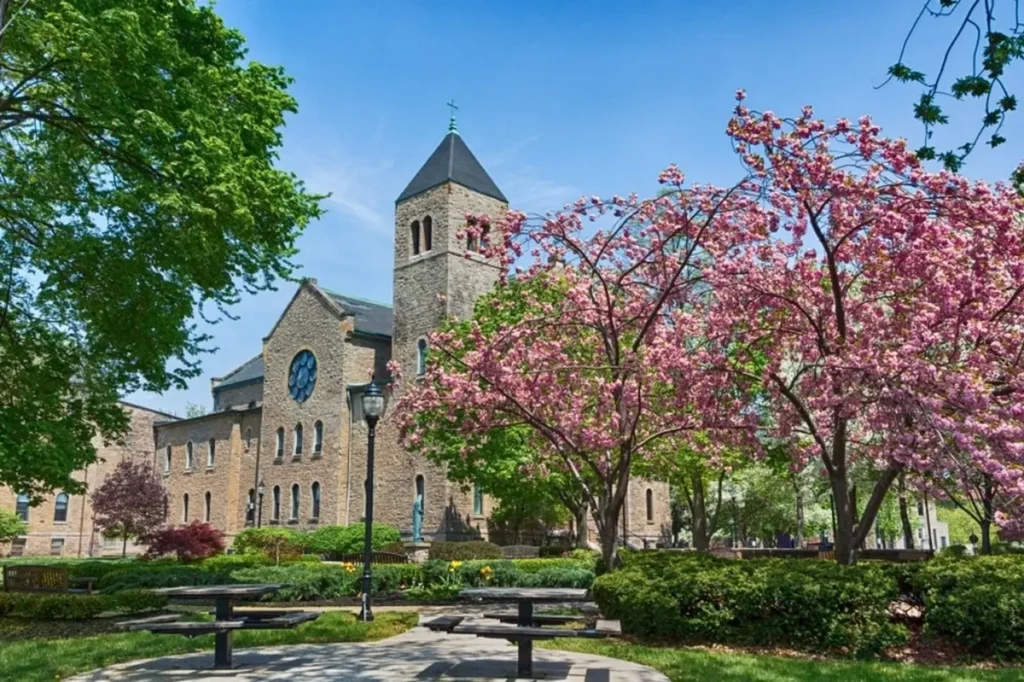
Counseling Programs at Niagara University prepare you for a growing career field. Employment of school and career counselors is projected to grow 5% from 2022–2032, with approximately 26,600 job openings per year nationwide. These programs offer complete training backed by Council for the Accreditation of Educator Preparation (CAEP) accreditation, whether you’re interested in school counseling or clinical mental health counseling. The Niagara University counseling programs provide extensive hands-on experience through a 100-hour practicum and 600 internship hours in real-life settings. You’ll find what makes the Niagara University counseling program stand out: degree options, practical training opportunities, and pathways to licensure. Everything you need to know about launching your counseling career at this school is covered here.
What counseling programs does Niagara U offer?
Niagara University offers three distinct master’s programs through its Department of Counseling and Applied Psychology. The Clinical Mental Health Counseling program is a 60-credit-hour Master of Science degree designed to help those seeking employment in agency counseling settings. This program qualifies you for New York State licensure as a Licensed Mental Health Counselor (LMHC) and provides eligibility to sit for national certifications including the National Certified Counselor (NCC) and Certified Clinical Mental Health Counselor (CCMHC) examinations. The Council for the Accreditation for Counseling and Related Educational Programs accredits the niagara university counseling program in mental health.
The School Counselor program awards a Master of Science in Education (M.S.Ed.) with 48 credits that satisfy New York State’s original Certification requirements. You can also pursue an additional Certificate of Advanced Study (CAS) comprising 12 credits. This brings the total to 60 credit hours needed for professional certification eligibility. CAEP accreditation and approval from the New York State Education Department support this program. The Niagara University counseling program emphasizes the Vincentian tradition with particular focus on social justice and advocacy. Ethical practice arranged with American School Counselor Association standards guides the curriculum.
Niagara University also provides a Master of Science in School Psychology, rounding out the master’s degree offerings in the counseling field.
Professionals already holding master’s degrees can choose from several advanced certificate options:
- Advanced Certificate in Applied Behavior Analysis provides specialized training in behavioral interventions
- Post-Master’s Bridge Program in Clinical Mental Health Counseling requires a minimum of 15 credit hours, with additional coursework determined by your prior graduate study to meet NYS licensure requirements
- Post-Master’s Advanced Certificate helps School Counselors seeking permanent New York State certification
- Special Education: All Grades Advanced Certificate available in online format
The Bridge Program in Clinical Mental Health Counseling targets master’s level clinicians such as CASAC, NCC, CRC, and school counselors who need additional preparation to meet LMHC eligibility requirements. This program responds to changes in New York State licensure laws and prepares you to sit for the CCMHC examination, a required component of LMHC licensure.
Career pathways vary by program. Clinical mental health counseling graduates work in hospitals, mental health clinics, public agencies, private counseling practices, healthcare facilities, rehabilitation centers, and addiction treatment centers. School counseling graduates serve in K-12 educational settings but can also pursue roles in higher education and community programs.
The Middle States Commission on Higher Education provides regional accreditation to Niagara University. Your degree meets national standards for quality and transferability.
Internships/Practicum at Niagara University
Field experience is the foundation of training in the Niagara University counseling program. You progress through structured phases that build clinical competency. Your trip starts with a practicum phase designed to introduce you to professional counseling environments. You then advance to more intensive internship placements.
Clinical Mental Health Counseling and School Counseling programs both require you to complete a 100-hour practicum followed by 600 internship hours. The structure is different between programs based on your career track. Clinical mental health counseling has you complete two separate internship experiences totaling 600 hours in clinical settings. Licensed mental health professionals supervise these placements. Placements occur in environments of all types: clinics, healthcare facilities, public agencies, private agencies, career centers, rehabilitation facilities, law enforcement settings, addiction treatment programs and college counseling centers.
School counseling students take a different path. Placements are arranged in K-12 educational settings. Your practicum just needs experience at three different schools for the full 100 hours. You dedicate 40 hours to direct student contact. New York State requirements mandate you complete 300 internship hours at the K-8 level and 300 hours at the 9-12 level after you finish your practicum. Each internship phase just needs 120 hours of direct student contact. You work with students on individual counseling, group counseling, program development, needs assessment and consultation with parents and staff.
Program faculty and field placement coordinators work with local school districts to arrange your placements. You participate in the process by sharing your priorities regarding location and school level. Final arrangements happen through partnerships with elementary, middle and high schools across Western New York that are 20+ years old. Site supervisors must hold professional certification as school counselors. They maintain tenure in their districts. Clinical mental health placements require approval of both the site and supervisor before you begin your internship. This will give compliance with New York State guidelines.
The supervision structure has dual oversight throughout your field experiences. You meet with your site supervisor at your placement location each week. You also attend mandatory seminars on campus with university supervisors each week. This dual-supervision model gives you practical guidance in your immediate work environment and academic support that connects field experiences to classroom learning.
You register through your faculty advisor to receive academic credit for internship work. You pay tuition as part of your semester bill. Registration requires submission of a detailed duties description from your employer to Career Services. Your professor develops a syllabus that specifies experience goals and requirements. You prepare a reflective project that demonstrates your learning. You must complete between 120-200 contact hours depending on the specific course requirements. You maintain attendance for the full contract period and notify the university of any changes to your work status or contact information right away.
Contracts signed between Niagara University and placement sites formalize the arrangements. Students maintain logs of hours signed by both on-site supervisors and field placement coordinators. Performance evaluations completed during both practicum and internship experiences track your professional development throughout the counseling programs at Niagara University.
What sets Niagara University apart?
Small class sizes create tailored learning environments in the Niagara University counseling program, with an 11:1 student-to-faculty ratio that ensures you receive individualized attention throughout your studies. This intimate setting allows meaningful mentorship relationships with faculty who bring substantial expertise to your education. Dr. Derron Hilts, Chair of School Counseling, holds National Certified Counselor and National Certified School Counselor credentials. His course evaluations average 3.8 out of 4.0 from 2022 through 2026 and remain consistently strong. His research productivity has more than 25 peer-reviewed publications and over $35,000 in research funding. Dr. Jenifer Willson contributes over 30 years of teaching experience at multiple institutions. She maintains extensive clinical expertise in grief counseling and adjustment to disability.
Program quality shows in the employment outcomes. Graduates of the clinical mental health counseling program maintain employment rates well above 90 percent since 1994. 100 percent of 2015 graduates secured full-time positions within the field. These results reflect the value employers place on CACREP-accredited degrees. Only 231 private institutions across the United States earn this specialized accreditation.
Flexibility defines the learning experience at Niagara. Courses meet during early evenings in formats that vary: on-campus, online, and hybrid options accommodate your work schedule. The Bridge Program allows you to complete a Certificate of Advanced Study in clinical mental health counseling within one year. You receive assigned faculty advisors upon completing your admission application and meet with them to plan your program progression.
Financial support reaches more than 60 different scholarship and graduate assistantship opportunities to qualified students. These competitive awards may have tuition support, stipends, and service-based positions. Strong collaborations with Western New York school districts aid high-quality field placements. Career Services provides lifetime alumni support that has one-on-one coaching, mock interviews, job search preparation, and access to internship databases.
Next steps
Niagara University’s counseling programs give you the credentials, practical experience and professional skills needed for a successful career. CAEP and CACREP accreditation backs your education. You gain access to complete field training through 100-hour practicums and 600 internship hours. Small class sizes combine with expert faculty mentorship and strong employment outcomes (above 90 percent) that position you competitively in this growing field. Your pathway to licensure and professional certification begins here. Extensive resources and individual-specific guidance support you throughout your experience.