
Hofstra University Counseling Degrees
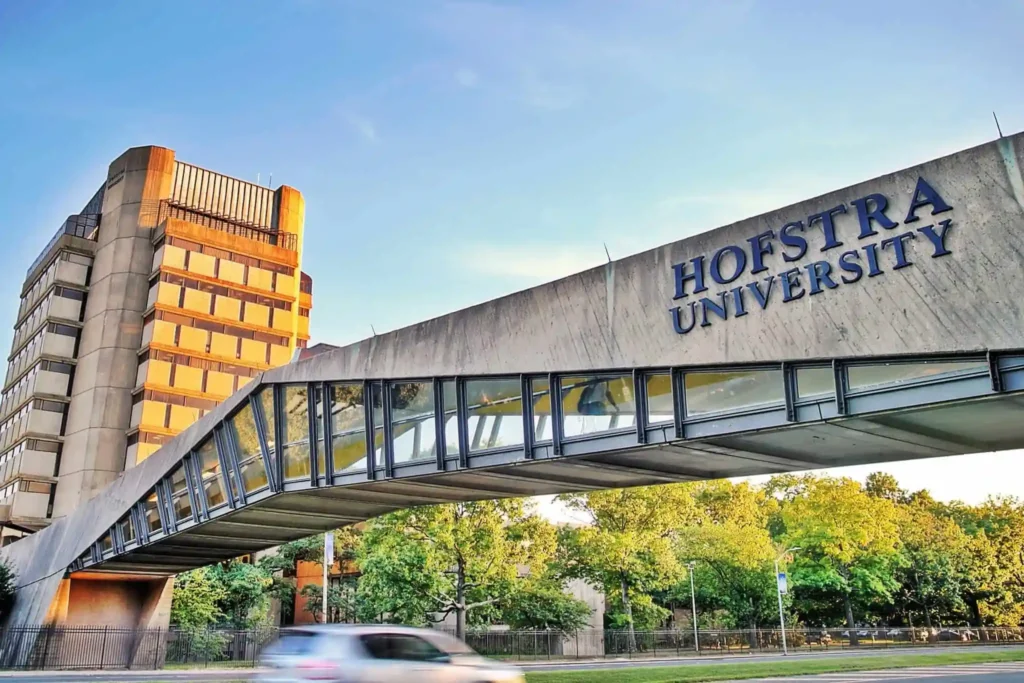
Hofstra University has positioned education at the core of its academic mission since its founding in 1935. The School of Education prepares skilled professionals for careers spanning schools, community organizations and higher education. Faculty members bring deep expertise and practical insight to a complete portfolio of programs that has bachelor’s, master’s, advanced certificate and doctoral degrees.
The counseling and mental health programs at Hofstra University prepare you to work as professional counselors, therapists and human service practitioners serving diverse populations in settings of all types. These graduate programs mix traditional study with hands-on experiential learning. You apply classroom knowledge in practical environments. Program faculty remain committed to preparing multiculturally competent practitioners equipped to promote mental health and personal efficacy while contributing to the improvement of social and educational systems.
Hofstra offers several pathways for aspiring counselors. You can pursue the MA in Mental Health Counseling, a 60-credit program designed to qualify you for licensure as a mental health counselor in New York State. The Council for Accreditation of Counseling and Related Educational Programs (CACREP), a specialized accrediting body recognized by the Council for Higher Education Accreditation, has granted accreditation to this program. The MSEd in School Counseling qualifies you for original certification as a school counselor.
You can earn advanced certificates in Addiction and Substance Abuse and in Mental Health Counseling. The addiction certificate allows you to complete the New York State Office of Alcohol and Substance Abuse Services’ educational requirements for the Credentialed Alcoholism and Substance Abuse Counselor (CASAC) designation. Dual degree programs provide an accelerated path and enable you to earn both undergraduate and graduate degrees in just 5-6 years.
Hofstra University holds membership in good standing with the Association for Advancing Quality in Educator Preparation (AAQEP), a national accrediting organization recognized by the Council for Higher Education Accreditation. Many programs meet New York State teacher certification requirements. Successful completion of State-approved certification programs makes you eligible to apply for state certification through the university. The faculty strives toward a more just, open and democratic society through collaboration with children, adolescents and adults in diverse social and cultural settings.
What counseling programs does Hofstra offer?
The Department of Counseling and Mental Health Professions delivers specialized training through multiple master’s degree pathways. Rehabilitation Counseling programs prepare you to assist individuals with disabilities in achieving personal, social, and psychological independence. The MS in Rehabilitation Counseling and the MS in Rehabilitation Counseling in Mental Health both require completion of 60 hours of coursework. CACREP has granted accreditation to these programs. They adhere to standards that help you become a competent and culturally sensitive practitioner.
The MA in Marriage and Family Therapy spans 54 credit hours and combines classroom instruction with intensive field experience. This program focuses on the emotional life of the family unit rather than the individual client. It prepares you to work with couples and families on conflict resolution in their relationships. New York State Education Department has registered this program as licensure-qualifying, which means all supervised client contact hours you gain count toward the total required for licensure as a marriage and family therapist in New York. You can complete the program on a part-time or full-time basis, with courses offered during fall, January, spring, and summer sessions.
Among master’s programs, Hofstra offers several advanced certificates tailored to specific career paths. The 12-credit Advanced Certificate in Rehabilitation Counseling serves professionals in related fields who wish to qualify for the national certification exam for Rehabilitation Counseling (CRC). The 21-credit Advanced Certificate in Rehabilitation Counseling in Mental Health targets rehabilitation practitioners or those in related counseling professions who need courses or field-based experience in mental health counseling to become eligible to sit for the LMHC examination in New York.
The 18-credit Advanced Certificate for the Interdisciplinary Transition Specialist addresses the needs of professionals who work with students with disabilities preparing to transition to adult life roles following high school. School counselors seeking professional certification in New York State can take the 12-credit Advanced Certificate in School Counseling that provides the coursework required. The department also offers programs in Creative Arts Therapy Counseling, expanding options for aspiring mental health professionals.
Internships/Practicum at Hofstra
Field experience requirements vary among counseling programs at Hofstra University. Each track builds competency through supervised clinical practice. Mental Health Counseling MA students complete a minimum of 600 internship hours over two semesters in approved mental health settings. You perform the duties and responsibilities of a counseling practitioner at your assigned site. An optional third semester of clinical internship adds 300 more hours and can be taken in place of an elective under advisement.
School counseling students follow a different pathway. The practicum provides your first chance to work with actual clients, requiring 100 hours of supervised fieldwork in school settings. Group supervision formats allow you to discuss critical counseling issues and develop your personal style. You receive peer feedback on multicultural and developmental considerations.
Marriage and Family Therapy students begin their clinical training at the Counseling and Mental Health Professions Clinic, located on campus in the Saltzman Center. You spend the first two semesters there under close supervision as you develop confidence. After this foundation, you transition to off-campus clinical settings for your final two semesters. These approved sites include child welfare agencies, community mental health centers, and hospitals. The 300 client-contact hours you accrue during internships count toward the 1,500 total hours required for licensure.
Doctoral students in the Student Counseling Services Psychology Internship program commit to a full-time, 12-month placement totaling 2,000 hours. The program provides two positions each year with a stipend of $32,800 and optional health benefits at no cost. You receive two hours of individual supervision and two hours of group supervision each week from licensed, doctoral-level psychologists. Site supervisors rate Hofstra interns favorably. 100% report adequate to more than adequate knowledge acquisition in ethical and legal standards of practice and contemporary issues in counseling.
Hofstra assists with placement by guiding students toward pre-approved internship sites, though you can suggest new locations for potential contract review.
What sets Hofstra University apart?
Accreditation sets Hofstra’s counseling programs apart from many competitors. The Mental Health Counseling MA holds CACREP accreditation, a specialized recognition from a body the Council for Higher Education Accreditation acknowledges. The Creative Arts Therapy Counseling MA carries CAAHEP accreditation and qualifies you to become a registered and board-certified Art Therapist. The Rehabilitation Counseling in Mental Health program achieved dual accreditation by both CORE and CACREP. This made it one of the first programs nationwide to earn this difference.
These counseling programs’ quality at Hofstra University shows in their rankings. U.S. News placed the Rehabilitation Counseling program at #18 in the nation. A survey of graduate students ranked the MSEd in Counseling 11th among comparable programs. The ranking considered academic competitiveness, career support and faculty accessibility.
Graduate outcomes confirm that the programs work. Mental health counseling graduates report 94% satisfaction with the program and 94% likelihood that they would recommend it to others. Alumni indicate they feel prepared for positions in the field at a rate of 82%. Employers and supervisors express strong approval as well. 62% report they are very satisfied with the program and 73% are very likely to recommend it.
Faculty credentials strengthen your educational experience. The department has a Fulbright scholar, book authors and professional journal editors who publish in the nation and abroad. Faculty members work as clinical practitioners and bring current field experience into classrooms.
The Mental Health Counseling MA carries STEM designation for international students. This lets you apply for a 24-month STEM OPT extension following your original post-completion OPT period.
Getting Started
Applications for Hofstra’s counseling and mental health programs follow a simple submission process. You can start your application online and upload required documents to the system. The preferred application deadline for fall semester admission falls on August 15, while spring semester applicants should submit materials by January 15. Applications received after these dates receive review based on available space.
The graduate admission team can help you make informed decisions about your program selection. You can visit the Hofstra campus or schedule virtual consultations with admission counselors who answer questions and help you meet program faculty or current degree candidates. Contact the team at graduateadmission@hofstra.edu or call 516-463-4723 to get direct assistance.
Current Hofstra undergraduates interested in pursuing joint undergraduate/graduate programs should reach out to graduateadmission@hofstra.edu to get specific guidance on accelerated pathways. International students need to review additional admission requirements specific to their citizenship status before submitting applications.
The university tracks graduate outcomes and surveys students about employment and professional activities after completing the program. This data demonstrates how Hofstra counseling graduates transition into their chosen careers.