
Counseling Programs offered at New York Institute of Technology
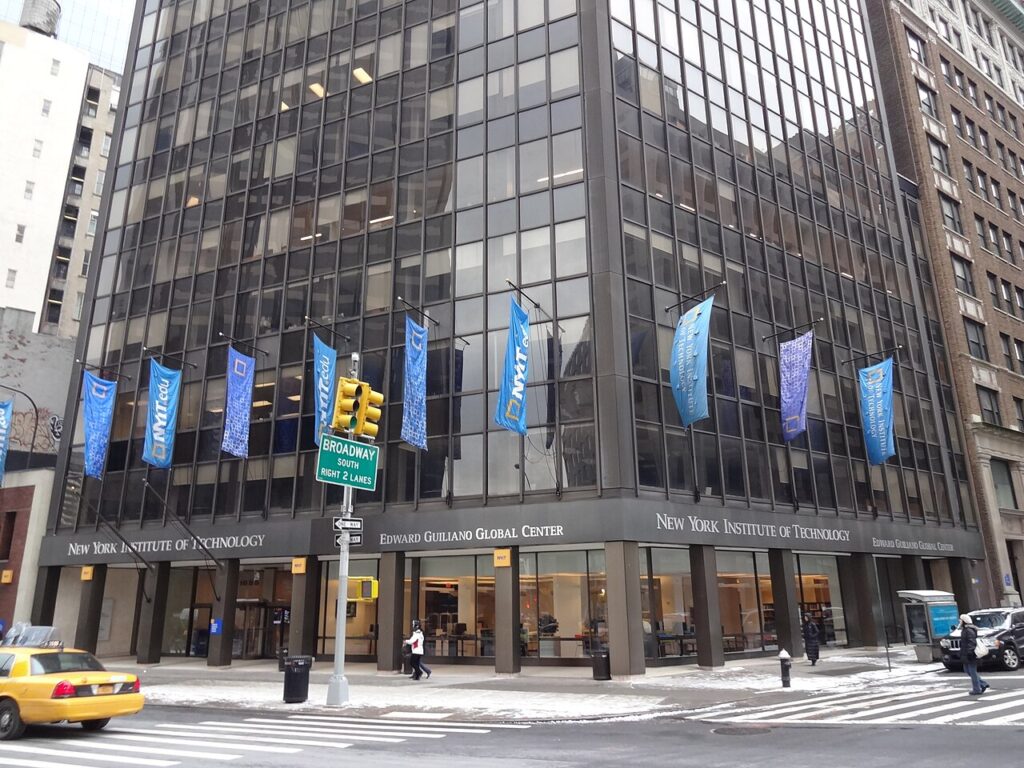
New York Institute of Technology stands in Old Westbury, New York. The institution offers graduate-level counseling programs designed to prepare skilled professionals for the mental health and education sectors. Specialized degree programs provide pathways if you have career goals as a licensed mental health counselor or certified school counselor.
The counseling programs at New York Institute of Technology include two primary master’s degree tracks and an advanced certificate option. The M.S. in Mental Health Counseling operates as a fully online 60-credit program. The M.S. in School Counseling follows a like graduate-level structure with CACREP accreditation. A 15-credit Advanced Certificate in Mental Health Counseling serves professionals transitioning from school counseling. It also helps those with 48-credit degrees who seek to meet licensure requirements.
Students pursuing masters in mental health counseling New York through NYIT receive training arranged with current best practices in the field. The Mental Health Counseling program prepares graduates to sit for the New York State Mental Health Licensing Examination and practice under supervision with a limited permit. Licensed mental health counselors and licensed clinicians in medicine, nursing, psychology, or social work can provide this supervision.
The School Counseling program holds accreditation from the Council for the Accreditation of Counseling and Related Educational Programs. This accreditation status confirms the program meets standards set by the professional counseling education community. The School of Education also maintains accreditation through the Council for the Accreditation of Educator Preparation, formerly known as NCATE.
Both masters in counseling New York programs emphasize three core principles: social justice, cultural sensitivity, and technological awareness. Faculty members integrate these values throughout coursework and field experiences. Students learn to work with diverse populations in settings of all types, from mental health agencies and substance abuse programs to pre-K through grade 12 school environments.
The curriculum prepares graduates to deliver services through multiple methods. Students develop competencies in individual therapy, group counseling, family counseling, career planning, crisis intervention, and health counseling. These skills apply in human service agencies, educational institutions, community counseling centers, and employee assistance programs. College graduates from backgrounds including education, helping professions, and business can enter these programs.
What counseling programs does NYIT offer?
The counseling programs offered at New York Institute of Technology include two master’s degree tracks, three advanced certificates, and combined bachelor’s-to-master’s pathways. Each program targets specific career objectives within the mental health and educational counseling fields.
The M.S. in Mental Health Counseling operates as a fully online program requiring 60 credits for completion. This program prepares graduates to sit for the New York State Mental Health Licensing Examination and has an extensive 700-hour practicum and internship requirement. Foundation courses (21 credits), core knowledge and skills (18 credits), advanced courses (15 credits), and electives (6 credits) make up the curriculum. Applicants need a minimum undergraduate GPA of 3.0, though those with GPAs between 2.85 and 2.99 may receive conditional acceptance.
The M.S. in School Counseling holds accreditation from the Council for the Accreditation of Counseling and Related Educational Programs. This 60-credit program follows a cohort model where candidates enroll in two courses per semester for part-time study or three courses per semester for full-time completion. A bilingual extension option exists for candidates pursuing both the school counseling degree and the provisional certificate with bilingual designation.
Three advanced certificates provide specialized training beyond the master’s degrees. The Advanced Certificate in Mental Health Counseling requires 15 credits and serves certified school counselors transitioning to Licensed Mental Health Counselor status. This certificate also accommodates mental health professionals with 48-credit degrees who need additional coursework to meet the 60-credit requirement for LMHC licensure in New York State. Credits earned through this certificate can apply toward either the M.S. in School Counseling or M.S. in Mental Health Counseling.
The Advanced Certificate in Bilingual School Counseling and the Advanced Certificate in Student Behavior Management each require three courses. Both programs offer flexible scheduling through blended or online formats with classes on weeknights and weekends.
Students seeking accelerated pathways can pursue a combined B.S. in Psychology and M.S. in School Counseling, completing both degrees in five years. Students with strong academic records may transition into the graduate counseling program after three years of undergraduate study.
Internships/Practicum at NYIT
Field experience requirements differ between the mental health and school counseling tracks at New York Institute of Technology. Students pursuing masters in mental health counseling New York complete a comprehensive 700-hour practicum and internship experience under professional supervision. This component prepares graduates for the New York State Mental Health Counselor Licensure Examination and develops practical skills in multiple clinical settings.
School counseling candidates follow a two-phase approach. The practicum experience requires 100 hours at one school and includes 40 hours of direct service. A tenured, certified school counselor provides supervision during this phase. After practicum, students enter a 600-hour internship that includes 300 hours of direct service. Program guidelines mandate experiences at two school levels with a minimum of 100 hours in the second placement. Students may allocate their time in different ways, such as 300 hours at a high school and 300 hours at a middle school.
Direct hours involve working with students and their families, collaborating with teachers, and taking part in school counseling meetings. Indirect hours consist of activities where students are not working directly with clients. University faculty assist candidates in determining appropriate sites for practicum and internship placements. All sites require advance approval before students begin field experiences.
Mental health counseling students gain experience at various organizations like North Shore University Hospital, Long Island Jewish Medical Center, and NYU Winthrop Women’s Wellness. Placement sites also include psychiatric centers, rehabilitation hospitals, and community counseling agencies throughout New York State.
Site supervisors meet with students weekly for one-hour sessions. NYIT field supervisors visit students twice each semester to establish relationships and provide support. Students must obtain liability insurance and complete fingerprint-supported criminal history background checks before starting any field placement. Orientation sessions prepare candidates for their practicum and internship experiences.
What sets New York Institute of Technology apart?
CACREP accreditation positions the School Counseling program among nationally recognized institutions meeting rigorous standards for counselor education. This difference verifies the quality and detailed nature of training students receive throughout their graduate studies. The Mental Health Counseling program prepares graduates to meet New York State licensing requirements while incorporating innovative practices for clinical work that works.
Performance metrics show the program works. The on-time graduation rate reaches 95% for students completing the program within their designated timeframe. An 85% completion rate reflects successful student progression through the 60-credit masters requirements. Job placement outcomes show 65% of graduates securing school counseling positions within 180 days of degree completion. An additional 15% find employment in related fields.
Faculty expertise shapes the learning environment at New York Institute of Technology. Dr. Nayoung Kim focuses her scholarship on counselor education and multiculturalism. She publishes research on reflective practice and multicultural counseling competence. Her work extends to school counselor-principal collaboration and international viewpoints on counseling approaches. Dr. Cameka Hazel employs a constructivist teaching approach that centers student experiences and creates opportunities for learners of all types to connect course content with future professional practice.
The competency-based framework requires candidates to demonstrate knowledge and skills in multiple domains. Mental health students develop expertise in cultural factors relevant to counseling diverse populations and crisis response. They also master biopsychosocial case conceptualization and ethical considerations specific to clinical practice. School counseling candidates master leadership and advocacy while building informed decision-making skills aligned with CACREP 2024 standards and the American School Counselor Association National Model.
Cross-disciplinary collaboration distinguishes these masters in mental health counseling New York programs from traditional approaches. Students participate in faculty research projects and present findings at annual symposiums. They also join the national school counseling honor society Chi Sigma Iota. Technology integration occurs throughout coursework rather than as isolated components.
Getting Started
Prospective students interested in the counseling programs offered at New York Institute of Technology can connect through multiple channels. You have several options to explore: attend an online information session, take a virtual tour, or visit one of the campuses. There you can meet students and faculty while speaking with the admissions team. These interactions allow you to ask questions about financial aid, scholarships and the admissions process.
Submit a graduate application along with a personal essay to apply for masters in mental health counseling New York programs. The essay should outline your rationale for choosing New York Institute of Technology and the mental health counseling profession. Include your career objectives upon graduation. You will participate in a face-to-face interview with the program chairperson. To ask specific program questions, contact Dr. Daniel Cinotti, Director of Counseling Programs, at dcinotti@nyit.edu, or Erin Fabian, Student Advisement Specialist, at efabian@nyit.edu.
Applications are reviewed on a rolling admission basis throughout the spring and summer semesters, as long as space remains available. Your file becomes complete once your application, official transcripts and all portfolio materials have been received. Reach out to admissions@nyit.edu or call 516.686.7520 for general admissions questions or to schedule an in-person appointment. You can also explore opportunities to offset program costs through New York Tech scholarships, graduate assistantships and federal financial aid options.