
SUNY New Paltz Counseling Programs
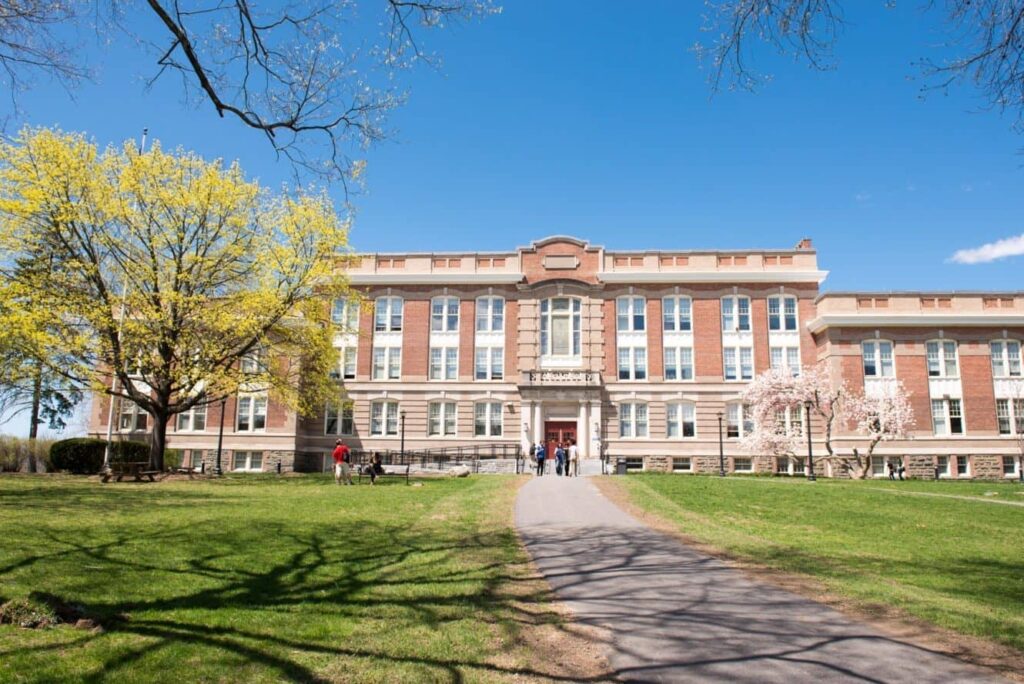
SUNY New Paltz operates a Counselor Education Program designed to train mental health and school counselors who are highly skilled and knowledgeable in counseling’s practice and science. The program combines rigorous academic standards with a collegial and supportive mentoring environment that treats students as emerging professionals. You’ll find an atmosphere committed to academic and personal development within a framework that values cultural and intellectual diversity.
The program’s mission centers on preparing counselors who possess the knowledge and skills to practice as competent professionals. You’ll develop intellectual curiosity and a commitment to expand your counseling knowledge and proficiency continually. The training emphasizes understanding and modeling professional standards and ethics while attending to your own personal growth and that of your future clients through supervision, interpersonal feedback and ongoing self-evaluation.
SUNY New Paltz offers several counseling degrees, including a Master of Science in Clinical Mental Health Counseling, a Master of Science in School Counseling, an Advanced Certificate in Clinical Mental Health Counseling and an Advanced Certificate in Trauma & Disaster Mental Health. These clinical mental health counseling graduate programs combine theoretical and skill-based approaches to serve clients. They prepare professional counselors who bring commitment, knowledge, skills, attitudes, values and self-awareness to their work with individuals, families and groups.
The 60-credit Master of Science in Clinical Mental Health Counseling serves students seeking licensure as mental health counselors and those planning to proceed into doctoral programs. The curriculum covers mental health counseling practice and research. It also includes coursework in human growth and development, social and cultural foundations, helping relationships, group work, career and lifestyle development, appraisal, research and program development, and professional orientation. The degree is registered with the New York State Education Department as meeting educational requirements for mental health counseling licensure in New York.
You can complete the MS in Clinical Mental Health Counseling full-time in two years, including summer classes. Part-time enrollment is available, though you must complete all degree requirements within five years after admission to degree candidacy. Programs can be pursued flexibly up to the time of internship, when a full-time commitment becomes necessary.
What counseling programs does SUNY New Paltz offer?
Beyond the clinical mental health counseling graduate programs, the university provides a 60-credit Master of Science in School Counseling that prepares you for certification as a school counselor. The degree has a core curriculum covering school counseling practice and research, with coursework in human growth and development, social and cultural foundations, helping relationships, group work, career and lifestyle development, appraisal, research and program development, and professional orientation. Practicum and internship experiences deliver hands-on school counseling training that meets state certification requirements.
The degree satisfies New York State educational requirements for both provisional/permanent and initial/professional certification in school counseling, with SUNY New Paltz recommending graduates for certification. You can complete this program full-time in two years, including summer classes, or opt for part-time enrollment over three years. As with the clinical program, all degree requirements must be completed within five years after admission to degree candidacy.
Professionals who seek additional credentials can pursue the 24-credit Advanced Certificate in Mental Health Counseling, which serves as a bridge program that addresses two distinct cohorts. Students with 36- or 48-credit degrees in mental health counseling accrue additional credits to meet the 60-credit education requirement for licensure. Those with 36-60-credit degrees in other counseling areas or related helping-professions disciplines acquire specialized courses and fieldwork to retrain as mental health counselors. All students complete a 9-credit practicum/internship sequence that has more than 600 hours of supervised mental health counseling experience, plus 15 additional credits based on prior graduate transcripts’ review. Graduates of the SUNY New Paltz MS in School Counseling require only 18 credits to complete this certificate.
The Advanced Certificate in Trauma and Disaster Mental Health consists of 15 credits: three required core courses plus two electives that let you focus on populations of interest. You may complete the program online within one year or extend it to accommodate your schedule. The certificate targets professionals who already earned a master’s degree or higher in counseling or social work, as well as current master’s or doctoral-level students who completed their first year of coursework.
Internships/Practicum at New Paltz
Students in both mental health and school counseling tracks complete supervised practicum and internship experiences that are the foundations of their applied training. You’ll need to accumulate 700 total hours across both experiences: 100 hours for practicum and 600 hours for internship. The practicum takes place during the second semester of your first year. It represents your first client work experience. The internship begins the following year with increased expectations for direct client contact and greater responsibilities.
You must complete at least 40 hours of direct counseling service out of your 100 total hours for practicum. For the internship, you’ll need at least 240 direct service hours from your 600 total hours. Direct service includes individual, family, and group sessions, plus psycho-educational presentations and therapeutic consultations. One hour of group counseling counts the same as individual counseling, whatever the group size.
You’ll receive one hour weekly of onsite individual or triadic supervision with your site supervisor. Supervisors must hold a Master’s degree or higher in a related discipline. Mental health counseling supervisors need a minimum of two years post-masters clinical experience and appropriate licensure. School counseling supervisors must be tenured with permanent certification in their discipline.
Both tracks require audio or video recordings of your sessions, which you’ll bring to university supervision after getting signed client permission. You’ll also complete site agreements detailing your work schedule, activities, supervisor credentials, and learning goals. Weekly time logs verified by your site supervisor document direct client contacts and other activities like case conferences and in-service trainings.
School counseling students must gain experience at both K-8 and 9-12 grade levels across their two internship semesters. The Counselor Education Training Clinic, launched during Fall 2025, provides additional training opportunities under faculty supervision. The clinic offers free individual and group therapy to SUNY New Paltz students and the community. On top of that, the Psychological Counseling Center serves as a training site for mental health counseling internships.
What sets SUNY New Paltz apart?
CACREP accreditation provides the strongest evidence of program quality at SUNY New Paltz. The Clinical Mental Health Counseling and School Counseling programs both earned accreditation from the Council for Accreditation of Counseling and Related Educational Programs. This signifies they meet national quality standards developed by experts in the counseling field. The Council for Higher Education Accreditation recognizes this accrediting body as a leading indicator of quality in counselor education programs nationwide.
The accreditation opens doors that remain closed to graduates of non-accredited programs. The United States Department of Veterans Affairs only hires Licensed Mental Health Counselors who graduated from CACREP-accredited programs. Credentials from accredited programs prove more portable and make relocation easier. Certification or licensure in other states becomes simpler. Any alumni who graduated since July 16, 2018, have been grandparented in. They can benefit from having graduated from a CACREP-accredited program.
Financial support improves accessibility to these counseling degrees at SUNY New Paltz. Selected students receive teaching assistantships each year. These positions offer $5,000 annually plus a six-credit tuition scholarship per semester. Other positions include Assistant in the Office of Psychology and Counseling Graduate Programs, Academic Advisor to undergraduate psychology students, Graduate Intern at the Career Advising and Development Center, and Technical Assistant at the Disability Resource Center.
Next steps
To apply to counseling degrees at SUNY New Paltz, start by selecting your program through the Graduate Admissions webpage. You’ll create an account to start your application, submit all required materials, and pay the $60 application fee. Application review for the Clinical Mental Health Counseling and School Counseling master’s programs begins February 1 and continues until the class fills. The Advanced Certificate in Clinical Mental Health Counseling admits students in both spring and fall semesters.
You must maintain academic standards throughout your enrollment once admitted. Students need a minimum GPA of 3.0 in graduate-level coursework, with only two grades below B- permitted in your plan of study. The Counselor Education Graduate Program accepts up to nine credits of graduate work from other institutions if you earned a grade of B or better. All degree requirements must be completed within five years after admission to degree candidacy.
Resolve any pending admission conditions before graduation. Review your progress report to verify completion of all program requirements and pass your capstone assessment. Contact your advisor if you need to amend your plan or process transfer credit.
To ask questions about clinical mental health counseling graduate programs, reach out to Melanie Hill, Chair of Counselor Education, at Wooster Hall 304. General questions can be directed to Susan Buckbee, Administrative Assistant, while application questions go to the Office of Graduate Admissions.