
Counseling Programs Available at Canisius College
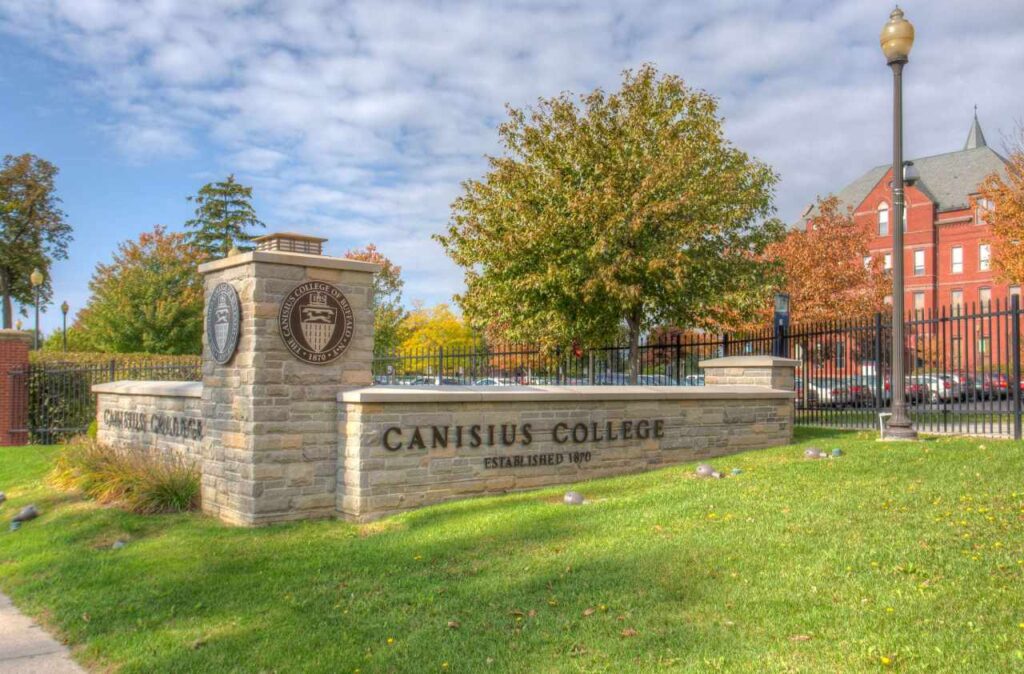
Canisius University houses its counseling programs within the School of Behavioral & Health Studies. The school offers two pathways for students pursuing careers in counseling. You can choose between Clinical Mental Health Counseling or School Counseling. Both are structured as 60-credit master’s degree programs and prepare you for professional practice in New York State and beyond.
Both programs share a common core curriculum that provides foundational knowledge for all counselors. This shared framework allows you to build expertise in counseling theories, human development, professional ethics and assessment techniques before you specialize in your chosen track. The Clinical Mental Health Counseling program prepares you for career settings of all types. These include mental health programs, substance abuse treatment facilities, veteran’s affairs, college counseling centers and private practice. School Counseling gives you the tools to work with students ranging from pre-kindergarten through high school in both private and public school systems.
CACREP accreditation distinguishes both programs. The Council for Accreditation of Counseling and Related Educational Programs recognizes quality professional preparation. This translates into greater job market recognition and better reciprocity for state and territory certifications beyond New York State. This accreditation also opens doors for educational opportunities beyond your master’s degree.
The programs deliver courses through a hybrid model that combines traditional in-person instruction with virtual asynchronous and synchronous online formats. This flexibility allows you to balance your academic pursuits with other commitments. You gain practical clinical skills through lab-based courses and field experiences.
Career prospects remain strong across both specializations. School counselors can expect job growth of 4% between 2023 and 2033. Mental health counselors face even more robust demand. Projected growth stands at 23% from 2020 to 2030, by a lot faster than average across occupations of all types.
Canisius offers a bridge program for candidates who already hold a master’s degree in counseling but lack required coursework for New York State mental health counseling licensure. This pathway accommodates professionals with degrees in school counseling, community agency counseling, college counseling or rehabilitation counseling. The program requires 12-18 credit hours typically.
What counseling programs does Canisius University offer?
The counseling programs at Canisius University center around two master’s degree offerings: Clinical Mental Health Counseling and School Counseling. Each program requires 60 credits to complete, with options for part-time enrollment (3-6 credit hours per semester) or full-time study (9-12 credit hours per semester).
Clinical Mental Health Counseling qualifies you for licensure as a Licensed Mental Health Counselor (LMHC) in New York State. The curriculum prepares you to work with clients diagnosed along a continuum of mental and emotional disorders. You can work in settings such as mental health counseling agencies, substance abuse clinics, crisis counseling centers, private practice hospitals and other clinical environments. Core coursework has Trauma, Crisis, and Loss Counseling, Counseling Theories, Psychopathology, Family and Couples Counseling, and Lifespan Development. Specialized mental health courses cover Principles and Practices of Mental Health Counseling, Case Formulation, Treatment Planning and Psychopharmacology, and Chemical Dependency and Rehabilitation.
School Counseling meets all academic requirements for professional certification in New York State and qualifies you for original certification in most other states. You can complete the program in as little as five semesters. The curriculum prepares you to promote academic, career, personal and social development of pre-K through 12th grade students. Beyond core counseling courses, you’ll take specialized school counseling classes that have Principles of School Counseling, School Practicum (with School Violence Prevention and Intervention Workshop), and Advanced School Counseling (with Dignity for All Students Act workshop). The program has internships at both K-8 and high school levels.
Part-time graduate students paid an average of $840 per credit hour for tuition during 2019-2020, with full-time students paying $15,120 in tuition plus $750 in fees. Online degrees are not accessible to more people at this time.
Recent program outcomes show strong enrollment and completion rates. During the 2019-2020 academic year, 19 students received their master’s degree in mental health counseling. Women made up 73.7% of graduates and racial-ethnic minorities represented 10.5%. The School Counseling program graduated 14 students during 2023. They earned 8 certificates and 6 master’s degrees.
Both programs require completion of mandated workshops that have Child Abuse Identification and Reporting Workshop required by NYSED[62]. You’ll also complete two elective courses in your chosen discipline or other areas with advisor approval.
Internships/Practicum at Canisius
Field experience is a required component of your counseling education at Canisius. You’ll start with EDC 577 Mental Health Clinical Practicum (3 credits). You must complete prerequisite courses EDC 597, 575, and 568 before you can enroll in practicum. After practicum, you’ll move into internship. You can select between full-time enrollment in EDC 600 Clinical Mental Health Internship or part-time options through EDC 601 and EDC 602, totaling 6 credits. EDC 598 Case Formulation, Treatment Planning and Psychopharmacology is offered only in fall semester and serves as a prerequisite to all internship courses.
Transition Point II is a screening process that determines your appropriateness for continuation in the program. This is where your path to practicum starts. The Counseling Candidate Screening Battery has a short autobiography, an empathy test, the Minnesota Multiphasic Personality Inventory II, and an interview with your full-time faculty advisor. You’ll receive information via email about scheduling these components a few weeks before your first semester begins. The screening fee of $50 appears in your college bill with general fees. You should complete this battery before classes start or within your first semester.
Additional requirements are triggered if your MMPI-2 results are invalid. A second invalid result requires two meetings: one with your advisor and another with your Program Coordinator. You must respond to email notifications within five business days and attend both meetings. A registration hold prevents class enrollment if you don’t. Faculty members review these meetings and determine next steps. These may include continuing in the program, developing a remediation plan, seeking personal counseling with a licensed mental health professional, pausing graduate studies for personal growth, or discontinuing enrollment in rare cases.
Transition Point III occurs after practicum and assesses your readiness to continue. You need a grade of B or better in practicum, and this grade should include your cooperating counselor’s evaluation[92]. Faculty review your writing skills through class assignments and verbal communication skills through class activities. They also review professional attitudes you demonstrated in field placement activities, with emphasis on dependability and responsibility[92]. The Candidate Concerns Process is initiated if there are concerns about your readiness. This process may result in a remediation plan that includes individual counseling, assigned service activities, or repeating practicum.
Summer semester availability remains limited for practicum and internship agency placements.
What sets Canisius University apart?
CACREP accreditation reaffirmation verifies Canisius University’s continued commitment to preparing exceptional counseling professionals. According to Shawn O’Rourke, PhD, dean of the Division of Business, Communications and Health Studies, the university takes pride in developing effective, socially committed counselors who embody Jesuit traditions of social justice and servant leadership. This values-driven approach spreads through the entire educational experience and creates an environment where future counselors develop skills needed to make meaningful change in their communities.
The faculty brings extensive field experience directly into the classroom. Your professors maintain active clinical practices and professional work that informs their teaching and provides you with current, ground perspectives. This practitioner-oriented approach means you learn from clinicians who understand the challenges you’ll face in professional practice. Faculty members provide responsive, collegial relationships with students and welcome learners from diverse cultural backgrounds.
Small classroom environments define the Canisius experience. You work closely with colleagues in intimate settings that encourage deep discussion about course material and promote genuine mentorship relationships. Professors challenge you to step outside your comfort zone and encourage calculated risks. They inspire ongoing curiosity as you begin your career. This tailored attention contributes to strong outcomes, with job placement rates reaching 95% for clinical mental health graduates and 90% for school counseling graduates within six months of completion.
Canisius University earns recognition for quality education consistently. U.S. News & World Report ranks the institution #32 among regional universities in the North, #5 for best value schools, #20 for undergraduate teaching, and #14 for veterans. Founded in 1870 as one of 27 Jesuit colleges and universities in the United States, Canisius maintains strong partnerships with area professionals that boost your educational experience and career prospects.
Getting Started
Canisius University provides detailed preparation for your counseling career through CACREP-accredited programs that blend rigorous academics with practical field experience. Experienced faculty, small classroom settings, and values-driven education create an environment where you develop clinical competence and social responsibility. Strong job placement rates and reliable career growth projections underscore the quality of these programs. Your investment in Clinical Mental Health Counseling or School Counseling positions you for a meaningful professional effect.