
Discover Counseling Programs at Fordham University
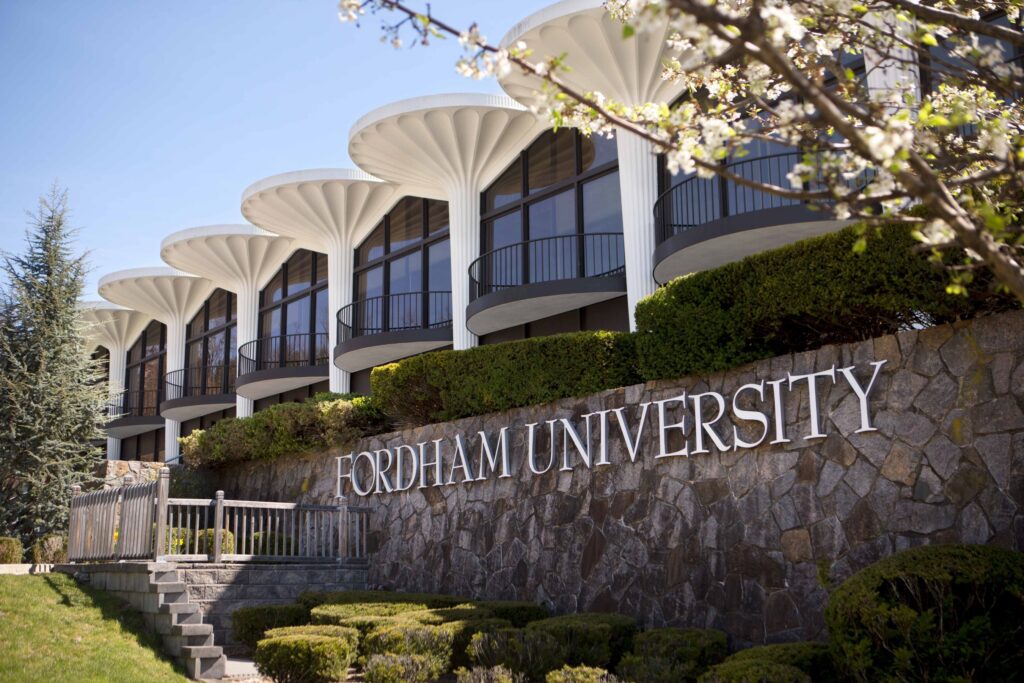
Fordham University’s Graduate School of Education houses the Division of Psychological and Educational Services (PES), which delivers complete training through master’s and doctoral programs in counseling and counseling psychology. These programs prepare you for diverse professional roles in K–12 schools, mental health clinics, hospitals, college counseling centers and independent practice settings.
The Mental Health Counseling program awards an M.S.E. degree. It follows a practitioner-scientist orientation with strong multicultural and social justice counseling emphasis. You can complete this 60-credit program in two years full-time or three years part-time. Both options require summer coursework. The program has a minimum 600-hour mental health counseling internship and prepares you for licensure eligibility after you complete 3,000 hours of supervised post-degree practice. The Masters in Psychology and Counseling Accreditation Council (MPCAC) accredited this program from January 2015 through January 2026.
Fordham’s Jesuit education emphasizes cura personalis (care of the whole person), and the mental health counseling program arranges with this philosophy. The program integrates psychological knowledge as the foundation to work. You’ll develop ethical decision-making competency in various settings and apply social justice viewpoints within evidence-based practices. The program encourages self-awareness for ongoing professional development.
Fordham university counseling psychology offers a Ph.D. program guided by a reflective scientist-practitioner model at the doctoral level. The American Psychological Association accredited this program in 1990. It received ten years of continued accreditation, the highest level the association awards. The program provides a strong foundation in psychological theory and research. It emphasizes multicultural counseling competencies, professional ethics and social justice advocacy.
The doctoral program accepts students with or without prior graduate coursework in counseling. Credit requirements adjust based on your entry standing. You qualify for independent practice or positions in colleges, agencies, clinics, hospitals and other clinical settings upon completing all requirements. The program also prepares you for research or academic careers. Program graduates satisfy academic and internship requirements to license as a psychologist in New York state.
Your location in New York City provides close geographical access to excellent clinical training opportunities. Premier sites include college counseling centers, schools, hospitals, VA facilities, community mental health centers and private practices.
What counseling programs does Fordham University offer?
Three distinct counseling programs at Fordham University prepare professionals to pursue specialized career paths in educational and clinical settings. The School Counseling M.S.E. program targets K-12 environments, while the Mental Health Counseling M.S.E. serves clinical populations. The Counseling Psychology Ph.D. advances research and practice expertise.
The School Counseling program requires 60 credits and prepares you to work in K-12 schools. This program meets course requirements for both provisional/initial and permanent/professional certification as a school counselor in New York state. You’ll complete 54 credits in five areas, a two-semester field experience, and a one-semester practicum. The program operates at the Lincoln Center campus with all courses delivered in on-ground format. Classes run during fall and spring semesters, with some courses available during two summer sessions.
The MPCAC accredited the School Counseling program from July 2015 through July 2026. You must get your own placements for Field Experience in School Counseling I and II, as well as for the Social Justice Practicum in Professional School Counseling. The program offers a bilingual extension option that requires field experience in a K-12 school setting where you work with bilingual children under supervision of a bilingual school counselor.
Completion requires adherence to academic integrity principles and professional ethical standards. You need to maintain a minimum 3.0 graduate GPA while completing the prescribed 60-credit program, with at least 54 graduate credits taken at Fordham. The program concludes with an end-of-program assessment among required practica and school counseling internships.
The doctoral Counseling Psychology program provides advanced training for those pursuing teaching, research, or clinical positions. The program structure accommodates both students with completed master’s degrees in counseling and those without previous graduate coursework in the field. Credit requirements adjust based on your entry standing.
These three programs emphasize multicultural competencies and social justice perspectives, reflecting Fordham’s commitment to preparing culturally responsive professionals who serve diverse populations in a variety of professional contexts.
Internships/Practicum at Fordham
Practical experience requirements differ between Fordham mental health counseling and doctoral programs. Each program is structured to build specific competencies that line up with professional practice standards.
The Mental Health Counseling M.S.E. mandates a 600-hour on-site supervised internship completed in fall and spring semesters. You begin this internship in the fall semester only and enroll in PSGE 6651 for fall and PSGE 6653 for spring. This field experience is one of five core requirements for degree completion. The other requirements include maintaining a 3.0 minimum GPA, completing all 60 credits with at least 54 taken at Fordham, adhering to academic integrity and professional ethics principles, and finishing an end-of-program assessment.
Fordham university counseling psychology doctoral students entering with a bachelor’s degree complete master’s-level coursework plus a full academic year of field experience at 20 hours per week under supervision of a doctoral-level psychologist. Two years of doctoral practicum become required after that. You work 16-20 hours per week in mental health settings during these practicums and attend weekly on-campus group supervision in doctoral practicum courses.
Each semester emphasizes a different theoretical framework. The progression moves through humanistic, cognitive-behavioral, psychodynamic, and integrative orientations. This rotation allows you to develop versatility in major counseling approaches. Many students also opt for a third year or summer externship to broaden their clinical exposure and register for a zero-credit externship class to document this experience.
You undertake a one-year full-time internship at an approved site upon completing all coursework and comprehensive exams. Eligibility requires a 3.5 or higher GPA, passed comprehensive exams, and an approved dissertation proposal. This final internship prepares you for independent practice and licensure eligibility in clinical settings of all types.
What sets Fordham University apart?
Several distinguishing characteristics position counseling programs at Fordham University among recognized graduate offerings in the region. The university ranks #115 in Clinical Psychology and #107 in Psychology nationally, with its Social Work program placing at #28. Fordham holds the #3 position for Mental Health Counseling in the Middle Atlantic Region.
Multiculturalism and social justice are the foundations of fordham university counseling psychology programs. Faculty research spans areas that include health psychology, family adjustment to illness, clinical supervision, developmental psychology, women’s issues, multicultural competence, racism, immigrant experiences, racial microaggressions, hidden biases, identity development, and mindfulness. This breadth allows you to participate with research teams that line up with your specific interests while conducting student-led investigations.
The acceptance rate is at 56% for the master’s program. 94% of enrolled students receive financial assistance. This accessibility, coupled with an 89% freshman retention rate, reflects students’ satisfaction with their educational experience. The institution maintains a 2.3% student loan default rate, much lower than the national average of 10.1%.
Faculty members provide guidance to match your clinical placements with career objectives. Weekly group supervision within doctoral practicum courses happens during externship experiences. You develop theoretical understanding and present case conceptualizations while receiving feedback from instructors and peers. The program culture prioritizes self-care and promotes cooperation between faculty and students. Cooperation rather than competition drives the training philosophy. The environment supports you as you work among peers to produce quality outcomes.
Your access to multiple research teams provides opportunities to develop investigation skills beyond coursework requirements. The program maintains both nurturing support and intellectual stimulation. These conditions allow you to pursue rigorous training within a cooperative framework.
Next steps
Application to Fordham mental health counseling and other counseling programs at Fordham University requires submitting materials through an online portal only. The admissions office marks your application complete when it receives the online form, $80 application fee, and all supplemental materials that include official transcripts and recommendation letters.
Admission criteria specific to each program vary at different degree levels. Mental Health Counseling and School Counseling M.S.E. programs require a minimum 3.0 undergraduate GPA. Applicants to the Fordham University counseling psychology doctoral program need both a minimum 3.0 undergraduate GPA and 3.5 graduate GPA if you hold a post-bachelor’s degree. The Ph.D. program offers optional GRE test score submission.
All applicants submit a personal statement, curriculum vitae or resume, official transcripts from all undergraduate and graduate coursework, and two letters of recommendation submitted online. Faculty review committees assess applications rather than admissions staff after you submit. You can verify receipt of supplemental materials through your application status page after submitting the original form.
International applicants whose native language is not English must demonstrate proficiency in oral and written English. You also need to provide translated transcripts with course-by-course evaluations converted to U.S. grading scales.