
Counseling Programs at Columbia University
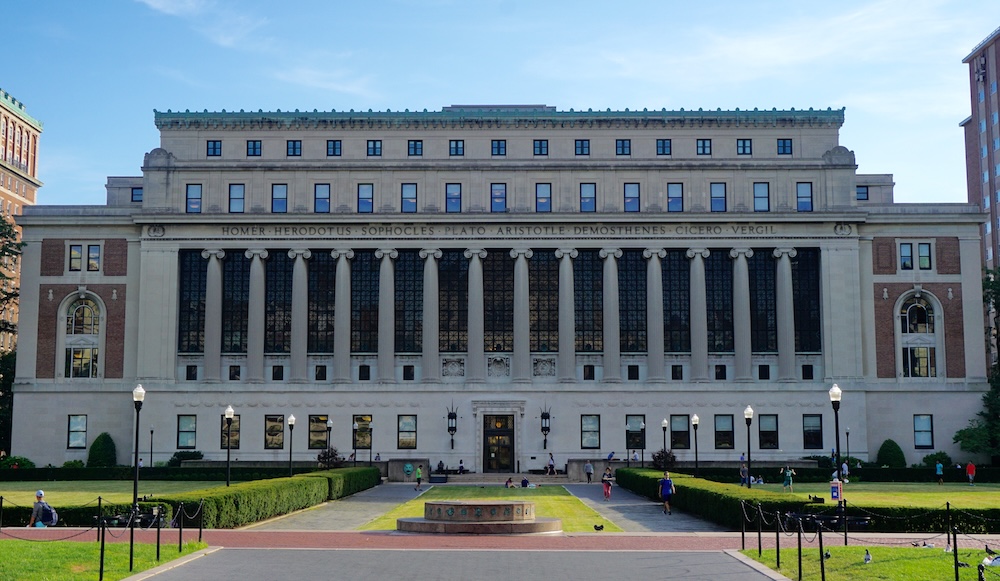
The Department of Counseling and Clinical Psychology at Teachers College, Columbia University prepares you to break down and address the psychological needs of individuals, families, groups, organizations, and communities. Your training focuses on becoming a knowledgeable and proficient researcher while you develop skills to provide psychological and educational leadership as an effective practitioner.
Two primary degree pathways form the program’s structure. The Master of Education (Ed.M.) offers two tracks: Mental Health Counseling and School Counseling. Both are designed to make normal and optimal development easier across the lifespan. The Ed.M. in Mental Health Counseling trains you in the assessment, evaluation, amelioration, and treatment of socio-emotional disorders and dysfunctions. The program received accreditation from the Masters in Psychology and Counseling Accreditation Council (MPCAC) for the period of February 2016 through September 2026.
The Ph.D. in Counseling Psychology reflects a scientist-practitioner model for doctoral-level training. You learn to address problems associated with adaptive functioning, apply relevant research literature to client concerns, and contribute to the research knowledge base. Graduates from these programs pursue positions in teaching, research, policy, administration, psychotherapy, and counseling.
Columbia stands apart through specialized concentrations that address specific community needs. The Spirituality Mind Body Institute’s (SMBI) Summer Intensive Master’s Program is the first Ivy League graduate program dedicated to merging spirituality and evidence-based research within clinical psychology. The Bilingual Latina/o Mental Health (BLMH) concentration within the Ed.M. program, approved in 2015 by the New York State Education Department, remains the only program in New York offering culturally appropriate training in delivering mental health services in Spanish to Latinas/os.
Your education operates on the premise that academic scholarship and research cannot be separated from professional practice. This philosophy spreads through the curriculum, where you encounter concurrent training in theory, asking questions, and practice throughout your studies. The program maintains a firm commitment to multicultural diversity and seeks to create an environment where you develop competence in addressing issues pertaining to cultural and identity group membership across populations of all types.
What counseling programs does Columbia University offer?
Columbia University’s counseling degree programs span master’s and doctoral levels. Each is structured to meet specific professional goals and licensure requirements. The Ed.M. in Mental Health Counseling requires 60 points of planned, sequential study beyond the bachelor’s degree. At least 42 points must be taken at Teachers College. This program provides license- and certification-eligible training for mental health counselors and received accreditation from the Masters in Psychology and Counseling Accreditation Council (MPCAC) for the period of February 2016 through September 2026. You gain preparation for positions in social agencies, organizations, career counseling centers, rehabilitation facilities, mental health centers, hospitals and other community and government agencies.
The Ed.M. in School Counseling follows the same 60-point structure with at least 42 points at Teachers College. This specialization qualifies you for initial certification as a School Counselor in New York State after program completion. Columbia mental health counseling students can also pursue the program through an online format. The format offers synchronous and asynchronous coursework while you maintain the same quality and certification eligibility as the on-campus track. The online program has the Vanguard Scholarship, specially designed for distance learners.
Students completing either Ed.M. track can apply for the M.A. en passant degree in Psychological Counseling. This degree requires a minimum of 32 points along with the Comprehensive Examination. This option provides credential flexibility without extending your time in the program.
To earn a Ph.D. in Counseling Psychology, students must complete a minimum of 90 planned credit points of doctoral-level study after their undergraduate degree. At least 60 points must be taken at Teachers College. The program operates on a scientist-practitioner model and has specialized training through the Bilingual Latinx Mental Health Concentration. New York State approved this concentration in 2015. It trains students with intermediary Spanish fluency to become bicultural and bilingual counselors serving Spanish-dominant and bilingual multi-racial Latinx clients. Bilingual faculty teach all courses within this concentration. Bilingual licensed supervisors oversee fieldwork sites.
Columbia counseling psychology offerings also extend to clinical psychology programs. The M.A. program serves applicants deepening their commitment to academic background in psychopathology, treatment, theory and research methods before pursuing doctoral programs. The Ph.D. in Clinical Psychology provides rigorous training in clinical science and clinical assessment and maintains APA accreditation through June 2031. The Advanced Certificate in College Advising gives counselors and educators tools to demystify the college admissions process.
Internships/Practicum at Columbia University
Practical training is a critical component of your education at Columbia. It bridges classroom theory with real-life application. The Ed.M. in Mental Health Counseling requires one year of supervised fieldwork through CCPJ 5260, Fieldwork in Psychological Counseling and Rehabilitation, totaling 6 points spread over two or three semesters. You also complete CCPJ 5360, Practicum in Career and Personal Counseling, worth 1 point. These requirements prepare you for the 3,000 hours of post-master’s supervised experience needed to become eligible for licensure as a mental health counselor in New York State.
The Dean Hope Center for Educational and Psychological Services (DHCEPS) serves as an integral part of teaching and training programs in Clinical, Counseling, and School Psychology. This facility allows you to integrate theoretical coursework with practicum experience within a multidisciplinary setting under qualified supervisors.
Doctoral students in clinical psychology begin hands-on training after their first semester. You become a staff member at the Dean Hope Center and carry a regular caseload of clients. You work with four clients as part of your psychotherapy practicum. You receive two hours of supervision each week with two different supervisors. The Center sponsors case conferences where you present and discuss cases. The core team or adjunct faculty who are psychologists in private practice in New York supervise clinical work.
You complete a full-year adult psychodynamic psychotherapy practicum (CCPX 6335) alongside an additional elective full-year clinical rotation during your second year. Many practica and externship opportunities exist throughout the New York area. Recent Ph.D. students secured competitive internship placements at prestigious institutions including Harvard Medical School/McLean Hospital, Yale University School of Medicine, Mount Sinai facilities and various VA Medical Centers in multiple states.
What sets Columbia University apart?
Accreditation longevity is evidence of program quality at Columbia counseling degree program. The Clinical Psychology Program earned APA accreditation in 1948 as part of the first group of reviewed programs and has kept uninterrupted accredited status through June 2031. The Counseling Psychology PhD program holds APA accreditation through 2033. This sustained recognition reflects decades of meeting rigorous professional standards.
What distinguishes Columbia counseling psychology from other programs involves the in-depth infusion of racial-cultural and social justice emphases throughout every component. The curriculum doesn’t confine multicultural instruction to courses with “multicultural” in their titles. You experience every course and program element within a social justice and racial-cultural framework instead. This orientation arranges with the belief that socially-just practice equals ethical, effective practice.
The program places strong emphasis on experiential training and self-awareness within counselor preparation as well. You serve as the instrument enacting professional work, so understanding your interpersonal style, skills and biases directly affects your effectiveness]. Courses like Foundations, Group Counseling and Racial-Cultural Counseling Lab provide transformational experiences. You learn about yourself while learning psychology practice.
Research exposure occurs through faculty whose work has shaped the counseling profession. Every faculty member maintains ongoing research teams open to students at any level of training. You receive guidance through a mentorship model where your selected faculty advisor orients you to the program, develops curriculum plans and provides research mentorship on their team.
The infrastructure supporting your education has 16 affiliated research centers, 44 full-time faculty and 147 affiliated psychologists. The Winter Roundtable represents the longest-running continuing professional education program in the United States devoted to cultural issues in psychology and education. Program effectiveness shows in outcomes, with an 88.5% five-year graduation rate for students who enrolled in Fall 2019.
Next steps
Columbia University’s counseling programs provide rigorous academic training and extensive practical experience. The programs stand out through their commitment to social justice and multicultural competence. They offer specialized concentrations like the Bilingual Latinx Mental Health track. Your education prepares you for career paths in counseling, research and leadership.
The programs maintain decades of APA accreditation. Graduates secure competitive positions nationwide. You gain both credential credibility and the skills needed to address psychological needs in a variety of populations.