
Counseling Programs offered at Keuka College
Counseling Programs at Keuka College are a chance to customize your education and arrange it with your career goals. The Psychology program provides four distinct pathways: Clinical/Counseling, Family/School Psychology, Forensic, and Health. Each pathway prepares you for specific careers in high-demand fields. You’ll get hands-on experience through four Field Period experiences and apply your knowledge in ground settings before graduation.
This guide explores what sets Keuka College majors apart within psychology and counseling. You’ll find the available programs, including pathways that complement the Keuka College MSW program and internship opportunities. We also cover the next steps to start your trip toward a career in counseling by getting your start at this school.
What counseling programs does Keuka College offer?
Keuka College provides multiple degree options for students pursuing counseling and mental health careers. The Psychology program has a Clinical/Counseling pathway within the Bachelor of Arts degree at the undergraduate level. This pathway prepares you for graduate study in clinical and counseling psychology through specialized coursework in developmental psychopathology, personality theory, abnormal psychology, and introduction to clinical psychology. The pathway requires 28 credit hours of specialized courses, coupled with 12 credit hours of Field Period experiences.
The Psychology with Mental Health BA offers a more concentrated approach for students focused on mental health applications. This program requires 62 credit hours of major coursework. It integrates psychology with education and social work courses. You’ll complete courses in behavior modification, clinical intervention in psychology, and advanced topics in abnormal psychology. The curriculum has methods of social research and group processes. This provides you with both clinical knowledge and practical research skills. You’ll complete four Field Periods totaling 12 credit hours, just like other psychology majors.
Keuka College offers three Master of Social Work programs at the graduate level. Each program is designed for different educational backgrounds and time commitments:
- Traditional Track (Online): This 100% online program is designed for students without a social work degree and requires 60 credit hours and 900 field hours. You can complete the program in 2.6 years while gaining clinical mental health treatment skills.
- Advanced Standing (Online): This accelerated track is built for students who already hold a Bachelor of Social Work (BSW) and requires only 33 credit hours and 500 field hours. You can finish in 1.7 years, or just five semesters.
- Hybrid MSW: This option is available for Advanced Standing students and combines on-campus classes at the Keuka Park location with online coursework. Students can complete this program in less than a year—11 months.
All MSW programs at Keuka College maintain a clinical focus and prepare you to pursue licensure as a Licensed Clinical Social Worker (LCSW). The Council on Social Work Education (CSWE) accredits the programs. This ensures you receive recognized credentials. The MSW degree translates well to generalist positions and leadership roles in various organizations beyond mental health provider roles. These positions range from agency executive directors to school social workers and substance abuse counselors.
The placement team identifies and secures quality field sites within your local community for all MSW tracks. This allows you to focus on coursework while gaining hands-on clinical social work experience.
Internships/Practicum at Keuka
Hands-on experience are the foundations of counseling education at Keuka College through two distinct experiential learning models. The Field Period® program serves undergraduate students, while field placements and practicum experiences prepare graduate students for clinical practice.
Field Period® operates as a 140-hour course that you’ll complete annually throughout your undergraduate years. Each experience just needs at least 120 on-site hours, with an additional 20 hours dedicated to reflective assignments. You earn three academic credits for each Field Period®, graded on a pass/fail basis. The self-designed nature of these experiences allows you to explore interests through internships, observations, cultural experiences, community service projects, or even spiritual-based exploration.
Career outcomes prove the worth of these immersive opportunities. Sini Ngobese completed her sophomore Field Period® with a Boston-based Fortune 500 company and received a job offer two years later upon graduation. Julianna Zizzo received two job offers after her first Field Period® from both sites where she completed her experience. More than 94% of alumni confirm Field Period® played a key role in developing their careers by the time you graduate.
Field placement requirements differ by track to social work students pursuing the Keuka College MSW program. The traditional track demands 900 hours of fieldwork, while the advanced standing track requires 500 hours. The field placement team cooperates with you to secure quality sites that reflect your educational goals, desired practice specialty, and scheduling requests. Students complete field hours at community centers, human service agencies, counseling and therapy centers, addiction and mental health treatment facilities, adoption agencies, senior care facilities, correctional facilities, and hospitals or clinics.
Senior social work students face the most intensive practicum requirement through SWK-450, a 15-credit learning experience taken during spring semester only. You’ll complete a minimum of 416 total hours at your practicum site, working 35 hours per week. Practicum sites fall within a 100-mile radius from campus, though students have traveled as far as Albany, New York. Some placement sites include Chemung County Family Services, Division for Youth Services, Elmira Psychiatric Center, Hillside Family of Agencies, Finger Lakes Addictions Counseling and Referral Agency, Yates County ARC, Strong Memorial Hospital, F.F. Thompson Hospital, Ontario County Department of Social Services, Wayne County Counseling Center, and nursing home facilities.
Students in occupational therapy accumulate around 1,380 hours of hands-on learning by graduation. OT students participate in Field Period® internships during their freshman, sophomore, and junior years along with required fieldwork placements.
Fieldwork sites do not pay students because of the educational nature of these experiences. You remain responsible to transportation and travel expenses. The field placement team will give all experiences meet accreditation standards and verifies that agencies and field instructors receive approval prior to your fieldwork start date.
What sets Keuka College apart?
Faculty expertise distinguishes Counseling Programs at Keuka College from other institutions. Dr. Susan Strickland brings over three decades of clinical experience as a Certified Rehabilitation Counselor and Psychologist. She has worked in outpatient and long-term care programs since 1994. Her specialized knowledge spans cognitive impairments, brain-behavior relationships, dual diagnosis and clinical interventions if you have neurological impairments. The Brain Injury Association of New York State recognized her contributions in 2016 with a volunteer and Medical Honoree award. Dr. Carrie Roberts serves as Associate Vice President for Experiential Education and Wellness and contributes more than two decades of clinical and academic experience while remaining an active practitioner. Her dual role ensures students benefit from current, real-life insights integrated into coursework.
Accreditation verifies the quality of Keuka College majors in counseling and social work. The College maintains institutional accreditation through the Middle States Commission on Higher Education, most affirmed in 2022. The Keuka College MSW program holds specialized accreditation from the Council on Social Work Education (CSWE), while education programs earned full accreditation through the Association for Advancing Quality in Educator Preparation (AAQEP) through December 31, 2028.
Student support extends beyond traditional academic advising through grant-funded initiatives. The Title III BRASS project creates a detailed support network designed for first-generation and lower-income students. You gain access to peer mentoring that extends beyond new student orientation throughout your first year and intrusive advising through a momentum advocate who helps you work through challenges and overcome obstacles. Supplemental instruction targets courses that present barriers to student success.
Mental health resources reflect the College’s steadfast dedication to student wellness. The OASIS app provides 24/7 support to manage life stressors and is funded through a SAMHSA Mental Health Awareness Training grant. The app offers solution-based motivational interviewing through confidential chat monitored by mental health professionals. Students enrolled at Keuka College receive up to eight individual counseling sessions each semester at no cost and group support options. The Health & Counseling Center operates Monday through Friday from 8 a.m. to 4:30 p.m. during the academic year.
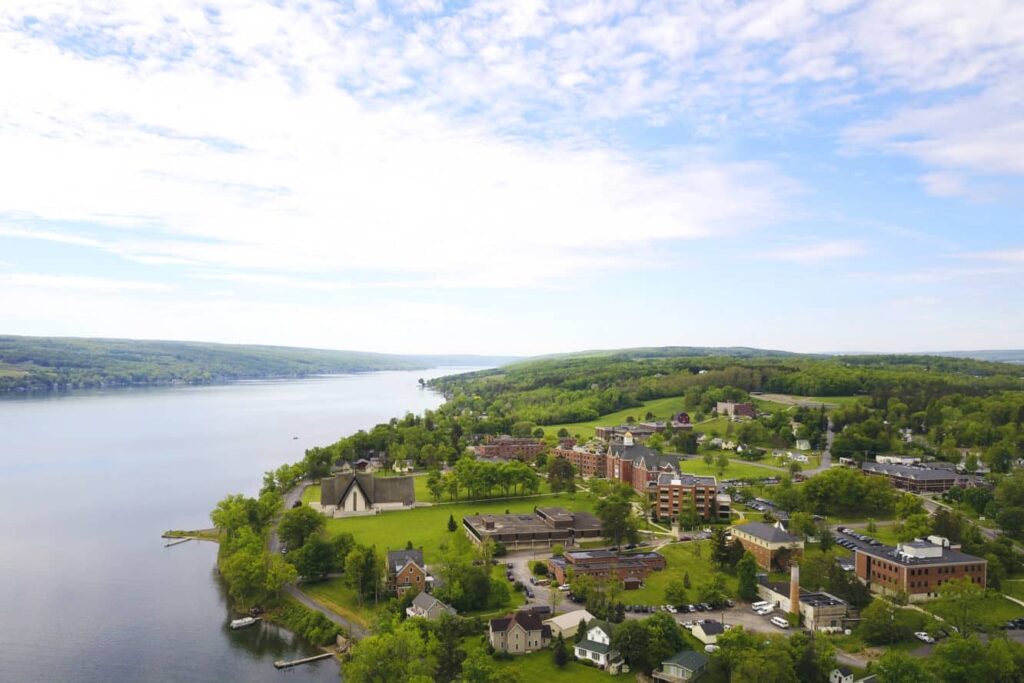
The scenic location on a lake in one of the world’s most beautiful regions provides a tranquil environment to study intensively. Students report that connections with faculty and administration position them to succeed in careers after graduation.
Next steps
Keuka College positions you to succeed in counseling and mental health careers through specialized psychology pathways and accredited MSW programs. The Field Period® model and extensive practicum requirements ensure you graduate with ground experience. This shows in the results: 94% of alumni credit these opportunities with advancing their careers. Expert faculty, detailed student support, and a clinical focus give you the credentials and practical skills to become a mental health professional who can work effectively.